

Hi, I’m Ken Miller. I help personal trainers take control, grow their businesses, and thrive, backed by 30+ years of real-world experience.
When it comes to renting training space vs opening a studio in Alameda, most independent personal trainers reach a point where they have to decide what makes the most sense next.
At some point, most personal trainers in Alameda face the same question:
Should I rent training space, or should I open my own studio?
On the surface, both paths can lead to a successful business. You can build a strong client base, earn a good income, and create a career you enjoy either way. This isn’t a case of one option being right and the other being wrong.
But it is a decision that carries real consequences—financially, professionally, and personally.
Because underneath that question are a few deeper drivers.
For many trainers, it’s about independence—moving away from commercial gyms and doing things your own way.
For others, it’s about control—choosing your environment, your equipment, your schedule, and how you work with clients.
And for some, it’s about identity. The idea of having your own place—something that reflects your standards, your brand, and the kind of trainer you want to be.
All of that is valid.
But there’s a tension most trainers underestimate when making this decision.
On one side, you have speed. Renting training space allows you to get started quickly, keep costs lower, and focus on building your client base.
On the other side, you have control. Opening your own studio gives you full ownership of your environment, your brand, and your long-term direction.
Alongside that is another trade-off: risk versus autonomy.
Renting space limits your downside. Opening a studio increases both your upside and your exposure.
And this is where most trainers get caught out.
It’s not that they choose the wrong path.
It’s that they choose the right path too early.
They open a studio before their income is stable.
They commit to overheads before demand is proven.
They take on complexity before the business is ready to support it.
So the real question isn’t:
Which is better—renting training space or opening your own studio?
It’s:
What makes the most sense for you to do first, based on where you are right now?
That’s what this guide will help you answer.
Table of Contents
The Short Answer
If you’re deciding between renting training space or opening your own studio in Alameda, the right choice depends on the stage your business is at today—not where you want it to be.
Rent training space first if:
- You have fewer than 15–20 consistent clients
- Your income is not yet predictable month-to-month
- You want to minimise financial risk
- You’re still refining your offer
Consider opening your own studio if:
- You already have a full client roster and demand exceeds your capacity
- Your revenue is stable and consistent each month
- You want full control over your training environment and brand
- You’re ready to run a business, not just coach clients
Bottom line:
For most independent personal trainers in Alameda, renting training space is the smarter first step. It allows you to build consistent income, prove your business model, and reduce risk before taking on the financial and operational demands of your own studio.
What Each Path Actually Involves
Renting Training Space
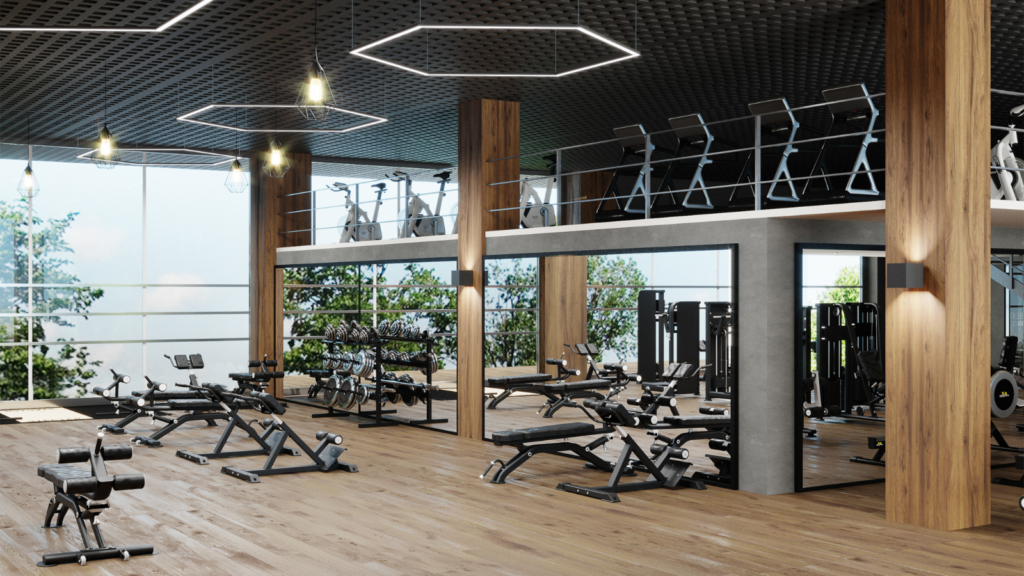
Renting space means running your own business inside an existing facility.
Typically, that involves either a fixed monthly rent or a revenue split. You bring your own clients, manage your own schedule, and operate independently—but the environment is already set up.
That includes:
- Equipment
- Training space
- Utilities and maintenance
Your focus stays where it matters most:
- Coaching clients
- Building your client base
- Generating consistent income
It’s the simplest and fastest way to operate independently without taking on unnecessary overhead.
Opening Your Own Studio

Opening a studio means taking full ownership of a physical space.
That involves:
- Leasing or purchasing a premises
- Designing and fitting out the space
- Buying equipment
- Managing utilities, insurance, and operations
You’re no longer just coaching—you’re running a facility.
Your focus shifts from:
- Coaching clients
to:
- Coaching + business management + operations
That brings full control and long-term potential—but also more complexity and financial exposure.
Side-by-Side Comparison
Here’s how the two options compare in practice:
| Factor | Renting Training Space | Opening Your Own Studio | What This Means |
| Upfront cost | Low | High | Easier to start vs significant financial commitment |
| Risk | Low | High | Easier to adjust vs harder to unwind |
| Time to start | Immediate | Months | Faster income vs delayed launch |
| Control | Limited | Full | Less autonomy vs full ownership |
| Focus | Coaching | Coaching + operations | Simpler vs more complex |
| Break-even point | Low | High | Easier to sustain vs pressure to fill schedule |
| Flexibility | High | Low | Easier to adapt vs locked into lease |
| Brand building | Moderate | High | Slower vs full brand control |
What This Really Means
Renting training space prioritises speed, simplicity, and lower risk.
Opening a studio prioritises control, identity, and long-term scale.
The right choice depends on which of these matters most at your current stage.
The Costs Most Trainers Don’t See
Most trainers focus on obvious costs—rent and equipment.
But the real differences show up elsewhere.
What Does It Actually Cost in Alameda?

In Alameda, the cost of opening a small personal training studio can vary depending on the size, condition, and location of the space.
But in practical terms, most setups tend to fall somewhere in this range:
- Monthly lease costs: typically around $3,000–$6,000+ per month
- Initial setup (equipment, flooring, basic buildout): often $20,000–$60,000+
- Ongoing overhead (utilities, insurance, maintenance): usually $500–$1,500+ per month
Those numbers aren’t exact, but they reflect what we generally see when trainers start looking seriously at their own space in this area.
The key point is this:
You’re taking on several thousand dollars per month in fixed costs before you’ve added a single new client.
By comparison, renting training space usually involves:
- a fixed monthly rent or revenue split
- significantly lower upfront investment
- far more flexibility if your situation changes
In most cases, the challenge isn’t the initial setup—it’s maintaining those monthly costs consistently while still building your client base.
Lease commitments are typically long-term and come with fixed monthly obligations that don’t change based on client demand (as outlined in standard commercial lease structures).
Understanding the Risk
This decision is ultimately about risk.
Renting space keeps your exposure low and gives you flexibility. You can adjust, refine, and grow without major commitments.
Opening a studio increases both your upside and your exposure.
Fixed costs rise. Pressure increases. Mistakes become more expensive.
And one pattern shows up consistently:
Opening a studio amplifies whatever is already working—or not working—in your business.
Where Most Trainers Get It Wrong
The issue isn’t effort.
It’s timing.
The most common mistake is opening too early—before income is stable and demand is consistent.
We’ve seen trainers open studios expecting to grow into them. In reality, the pressure to cover costs often changes how they operate—and not always for the better.
There’s also a tendency to overestimate demand. A studio doesn’t create clients—it just increases capacity.
In a competitive market like Alameda, demand has to be built first.
This isn’t a motivation problem.
It’s a sequencing problem.
A Simpler Way to Decide
If your business is still building—renting space is the smarter move.
If your business is already stable and demand is high—then a studio may make sense.
The key is not using a studio to create stability.
Stability needs to come first.
The Growth Path Most Trainers Follow
Most successful independent trainers move through three stages:
Stage 1 — Validation
- Build your client base
- Prove your offer works
Stage 2 — Stability
- Create consistent income
- Refine your positioning
Stage 3 — Expansion
- Increase capacity
- Consider opening a studio
The ones who struggle skip stages.
The ones who succeed move through them.
Why Alameda Changes the Equation
Alameda is not a low-cost market.
Lease costs are significant. Competition is strong. Client expectations are high.
That reduces your margin for error.
Opening a studio too early here can become unsustainable quickly—not because the idea is wrong, but because the timing is off.
Where Training Station Fits
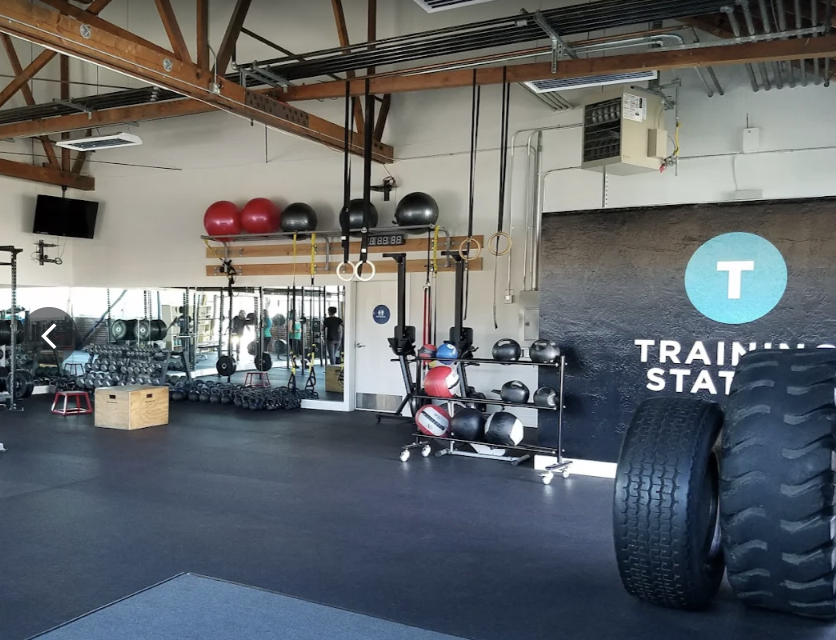
For most trainers, the challenge isn’t knowing what to do.
It’s having the right environment to do it in.
Training Station provides:
- A professional setup
- A strong training environment
- Without the overhead of running your own facility
This allows you to focus on what actually grows your business:
- Coaching
- Client results
- Building consistency
Over time, the pattern is clear:
The trainers who rush into a studio feel pressure early.
The ones who build steadily transition from a position of strength.
It’s not about avoiding owning a studio—it’s about getting there the right way.
FAQ
Is it cheaper to rent gym space or open a studio?
Renting is significantly cheaper to start, with lower upfront costs and fewer ongoing expenses.
How many clients do I need before opening my own gym?
Most trainers should have around 20 consistent clients or a full schedule with additional demand.
Can personal trainers make more money owning a gym?
Yes, but only if demand is consistent and costs are managed effectively.
What is the biggest risk of opening a studio?
Taking on fixed costs before your income is stable.
How long should I rent before opening my own space?
Until your income is consistent and demand exceeds your current capacity.
Bottom Line
For most independent personal trainers in Alameda, renting training space is the smarter first step.
It allows you to build income, validate your business, and reduce risk before taking on the demands of your own studio.
What to Do Next
If you’re at the stage where renting space makes more sense, the next step is seeing what a professional setup actually looks like in practice.
That usually brings clarity much faster than trying to figure it out in theory.
If you want to explore that, you can come in, take a look around, and get a feel for how it works — or simply have a conversation about where you’re at and what would make the most sense next.
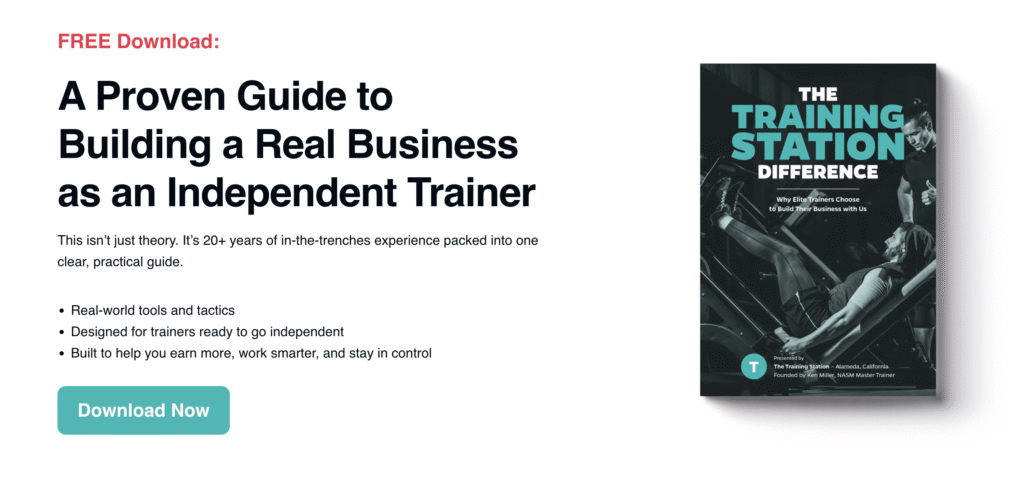
If you’re not quite ready for that yet, Ken’s free guide — A Proven Guide to Building a Real Business as an Independent Trainer — is a good place to start. It lays out the fundamentals of going independent, building your client base, and creating a business that works in the real world.
There’s no pressure.
The goal is simply to help you take the right next step based on where you are now.