


Hi, I’m Ken Miller. I help personal trainers take control, grow their businesses, and thrive, backed by 30+ years of real-world experience.
How much does it cost to rent gym space as a personal trainer in Alameda, CA?
It’s one of the first questions every trainer asks when considering going independent—and the answer depends on several factors, including location, facility quality, and how you structure your business.
If you’re a fitness professional in the Bay Area, you’ve probably felt the trade-off between freedom and cost.
Working at a big-box gym might seem secure, but it often means splitting your income and giving up control over your schedule and clients.
Going independent gives you freedom—but what does it really cost to operate your own training business in a city like Alameda?
This guide breaks it all down.
You’ll discover the typical costs of renting gym space in the Bay Area, how different rental models work, and which approach helps you keep the most profit while delivering the best experience for your clients.
By the end, you’ll know exactly what to expect financially—and how to make independence both affordable and sustainable.
What You’ll Learn in This Guide
- The average gym rental rates for personal trainers in Alameda and the Bay Area.
- The different rental models (hourly, flat-rate, and revenue split).
- The real costs of independence—and how to avoid hidden expenses.
- How to choose the right facility for your goals and client base.
- How Training Station Alameda helps trainers earn more while keeping overhead low.
Ready to Learn What It Really Costs to Go Independent?
If you’re ready to explore independence but want a clear understanding of the financial side, this guide will give you the clarity and confidence you need.
Compare Training Station Alameda’s rental options here.
Independent trainers in Alameda don’t need to own a gym to earn like business owners. With the right rental space, you can keep 100% of your income, charge premium rates, and build a brand clients trust.
Table of Contents
The Real Costs of Gym Rental in Alameda (2025 Overview)
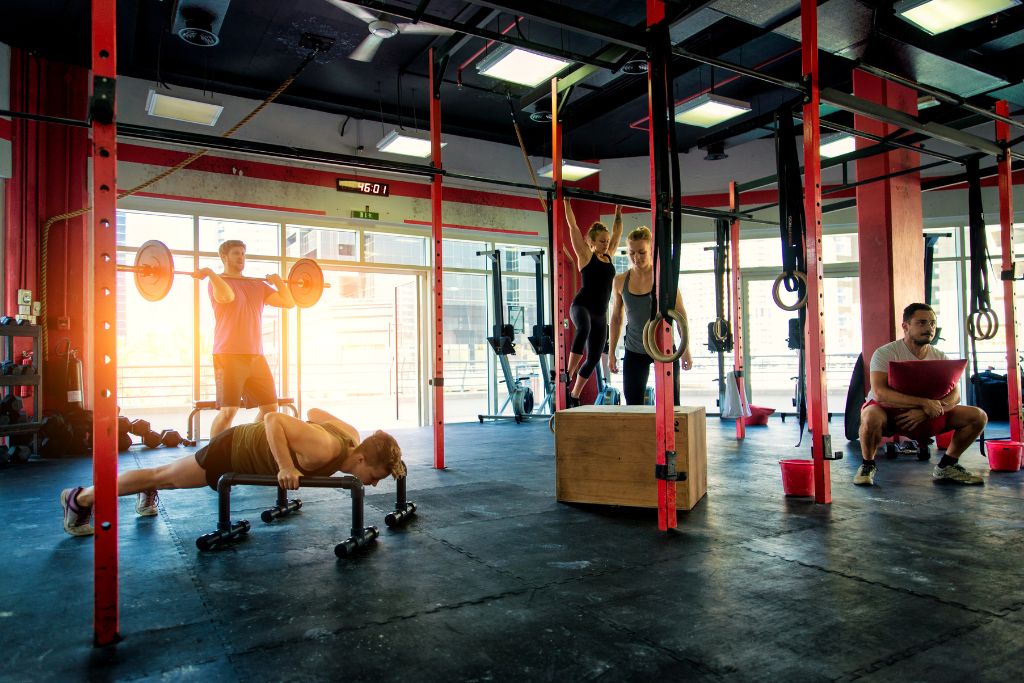
Short answer: Independent trainers in the Bay Area typically pay by the hour ($15–$100+), a flat monthly fee ($500–$1,500+), or via a revenue-share.
Alameda rates sit slightly below San Francisco and roughly in line with Oakland; the exact price depends on facility quality, amenities, and how often you train.
Sources: ricoarmstrong.com
The three models you’ll encounter
A) Hourly rental (pay per session)
- Typical Bay Area range: about $15–$100+ per hour, with premium SF studios on the higher end and smaller/private rooms at the lower end. Examples include SF studios posting specific trainer rates and marketplace averages for fitness studios. DIAKADI Fitness Performance Life
- Best for: newer independents building up sessions; trainers with variable schedules; coaches testing a new niche.
- Watch-outs: peak-time surcharges; minimum booking blocks; storage limitations.
B) Flat monthly membership (unlimited or allotment access)
- Typical Bay Area range: around $500–$1,500+ per month, depending on access level, hours, and amenities; an example Santa Clara trainer membership lists $750/month for unlimited access. Movement Hub Santa Clara
- Best for: trainers with consistent weekly volume who want predictable overhead and higher margins per session.
- Watch-outs: check access windows, guest policies, and cancellation terms.
C) Revenue share / “per-client” fees
- How it works: the facility takes a cut of each session or charges a per-client fee; some California gyms pay trainers a fixed rate while charging clients substantially more (i.e., the house keeps a large share). YMCA of Greater San Francisco
- Best for: very low start-up budgets or transitional phases.
- Watch-outs: effective take-home can be much lower than hourly or flat-fee models; raising prices may be restricted.
San Francisco vs. Alameda/Oakland: what to expect
- San Francisco commands the highest rates; established facilities publish trainer rental menus with precise hourly pricing for 1:1, duo, and small-group formats. Expect the premium end of the range here. DIAKADI Fitness Performance Life
- Marketplaces that list fitness studios in SF show broad averages (not trainer-exclusive), illustrating how location and amenities push rates up. Peerspace
- Alameda/Oakland offerings tend to be more flexible and often price based on usage bands (e.g., under/over 10 hours per week) or custom quotes; some publish trainer-friendly policies even when rates are provided upon inquiry. temescalfitnessmovement.com
What “extras” can change your price
- Amenities & exclusivity: private rooms, heavy strength equipment, recovery tools, showers, parking, and storage push rates higher. Premium SF studios price tiers accordingly. DIAKADI Fitness Performance Life
- Insurance and credentials: many Bay Area studios require proof of independent insurance and current certification to rent space. Fit With Julia
- Peak hours & small-group work: duo/semi-private usage often carries a higher rate than 1:1, but raises your hourly revenue more than it raises your rent. DIAKADI Fitness Performance Life
A quick reality check on “what clients pay” vs “what you keep”
Local nonprofits and Ys publicly list session prices to consumers (e.g., $72–$80 per 50-min in the East Bay), which helps you benchmark what your market tolerates—even though you won’t be splitting revenue with them when you rent independently. Use these public rates as anchors when setting your own pricing. ymcaeastbay.org
Action step:
If your calendar has 10–15 predictable sessions per week, a flat monthly model usually yields the best margins. If you’re still building your book or your schedule is irregular, start hourly.
When in doubt, compare options on the Training Station Alameda pricing page and run your numbers.
Alameda Rental Models Compared (Cost Math for Hourly vs. Flat-Rate vs. Revenue-Share)

When you’re comparing rental options in Alameda, three pricing structures dominate the market: hourly, flat-rate, and revenue-share.
Each offers different levels of flexibility, predictability, and earning potential.
Here’s how the math usually works.
Hourly Rental Model
How it works: You pay only for the hours you use—usually booked through the gym or a shared calendar.
| Item | Example Figure |
| Typical rate | $25–$60 per hour |
| Average sessions per week | 10–15 |
| Monthly cost (≈ 50 hours) | $1,250–$3,000 |
| Trainer income at $100 per session | $5,000–$7,500 gross |
| Net after rent | ≈ $2,000–$6,000 per month |
Pros: Maximum flexibility; ideal while building a client base; easy to scale up or down.
Cons: Higher cost per session; must pre-book prime hours; limited storage.
Best for: New independents or part-time trainers who want low commitment.
Flat-Rate Monthly Membership
How it works: You pay a fixed monthly fee for unlimited or allotment-based access.
| Item | Example Figure |
| Typical rate | $750–$1,500 per month |
| Average sessions per week | 15–25 |
| Monthly cost (≈ 50 hours) | $1,250–$3,000 |
| Trainer income at $100 per session | $6,000–$10,000 gross |
| Net after rent | ≈ $4,500–$8,500 per month |
Pros: Predictable overhead; higher profit margin per session; no booking limits.
Cons: Requires steady session volume; unused capacity still costs you.
Best for: Established trainers with consistent clientele and set schedules.
Revenue-Share or Per-Client Fee
How it works: The facility takes a percentage of each session (commonly 20–40 percent) or charges a fixed per-client fee.
| Item | Example Figure |
| Trainer charges | $100 per session |
| Gym share (30%) | $30 per session |
| Trainer keeps | $70 per session |
| 20 sessions per week (≈ 80 per month)** | $5,600 gross after split |
Pros: Very low startup cost; pay only when you earn.
Cons: Income ceiling; less control over pricing; effective rent rises with success.
Best for: Transitional trainers testing independence or part-time coaches with variable schedules.
Who Each Model Is For
| Model | Ideal for | Key Benefits | Watch Out For |
| Hourly | Early-stage trainers | Flexibility; minimal commitment | Expensive at high volume |
| Flat-Rate | Mid- to full-time independents | Predictable costs; strong margins | Need steady sessions |
| Revenue-Share | Transitional or low-risk trainers | No upfront rent | High effective “rent” as income grows |
Quick Takeaway:
If you’re training fewer than 10 sessions per week, hourly rental usually makes sense.
Once you’re above 12–15 sessions, a flat-rate membership delivers better profits.
Revenue-share models are a stepping stone, not a long-term strategy—because every extra session increases what you owe the gym.
Pro Tip: At Training Station Alameda, the flat-rate system combines the best of both worlds: flexible access, no revenue splits, and professional space that grows with your business.
What to Look for When Choosing a Rental Gym in Alameda

Finding the right gym to rent as an independent personal trainer in Alameda is about more than just price.
The space you choose shapes how clients perceive your professionalism, how smoothly your business runs, and ultimately, how much profit you keep.
Here’s what to evaluate before you commit to a gym rental agreement.
1. Location and Accessibility
How important is location when renting gym space?
In a word—critical.
A convenient, easy-to-access location directly impacts client retention. In Alameda and the broader East Bay, proximity to residential neighborhoods, parking availability, and public transit connections all play a major role in client decision-making.
Look for a facility that’s:
- Centrally located or close to where your clients live or work.
- Easy to reach from Oakland, Bay Farm Island, and nearby ferry routes.
- Has reliable parking or clear access instructions for clients.
A local example:
Training Station Alameda sits in a prime, accessible location just minutes from the Webster and Posey Tubes—making it easy for both local and off-island clients to reach without hassle.
Reality check: Even a $100 cheaper rental across the Bay can cost you clients if it’s hard to reach or inconvenient to park.
2. Facility Quality and Equipment
What should you look for inside the facility?
A professional-grade environment builds trust and reflects the value of your service.
Inspect the equipment, layout, and cleanliness with a client’s eyes—not just your own.
Ask yourself:
- Does the gym have the right mix of strength, mobility, and conditioning tools?
- Is there enough space for private or semi-private sessions?
- Are the locker rooms and restrooms clean and modern?
- Does the equipment match the style of training you deliver? (e.g., functional fitness, corrective exercise, athletic performance)
Reality check: Clients notice the details. Worn-out equipment and cluttered layouts signal low quality—no matter how skilled you are as a trainer.
3. Insurance, Certifications, and Contracts
What are the insurance and credential requirements for independent trainers in Alameda?
Most professional gyms require independent trainers to carry their own liability insurance (typically $1 million per occurrence) and provide a certificate of insurance naming the facility as additionally insured.
You’ll also need up-to-date certifications from recognized bodies like NASM, ACE, or NSCA.
Before signing any agreement:
- Verify what insurance coverage the facility expects.
- Ask if the gym has its own coverage for client-related incidents.
- Review the rental contract carefully—look for cancellation clauses, hours of access, and exclusivity rules.
Pro tip: A transparent, trainer-friendly facility—like Training Station Alameda—keeps contracts simple, fair, and easy to understand, with no hidden fees or long-term commitments.
4. Amenities and Added Value
What amenities should independent trainers look for?
Amenities improve your client experience and can justify higher session rates.
Key features to look for include:
- Towels, lockers, and showers for post-session convenience.
- Recovery and mobility zones with foam rollers, massage guns, or stretch areas.
- Meeting or consultation space for goal reviews or nutrition discussions.
- Secure equipment storage for your personal tools.
Reality check: A slightly higher rent at a gym with strong amenities often pays off through better client retention and premium pricing.
5. Brand Alignment and Client Perception
Why does the gym’s brand matter when you’re independent?
Because where you train says as much about your professionalism as how you train.
If clients walk into a well-maintained, high-quality space, it reinforces the value of your coaching.
Choose a facility that matches your personal brand—clean, organized, and welcoming.
A premium environment builds credibility, trust, and referrals.
Example:
At Training Station Alameda, the space is specifically designed for independent trainers who want to deliver a high-end experience without owning a full facility. The clean aesthetic, modern equipment, and private feel create an atmosphere that elevates both trainer and client perception.
Key Takeaway
Choosing the right rental gym isn’t just about cost—it’s about alignment.
When location, facility quality, and professionalism all work together, your business runs smoother, clients stay longer, and your reputation grows faster.
Discover how Training Station Alameda provides the ideal setup for independent trainers.
How to Maximize Profit When Renting Gym Space in Alameda

Renting gym space as an independent trainer isn’t just about managing costs—it’s about creating a system that keeps more profit in your pocket while delivering exceptional value to your clients.
Here’s how to set prices, manage margins, and build long-term sustainability.
1. Understand Your Profit Margin
How do you calculate your real profit as an independent trainer?
Your profit margin is the difference between what you earn from clients and what you spend on overhead (rent, insurance, taxes, and marketing).
Use this simple formula:
(Total Client Revenue – Business Expenses) ÷ Total Client Revenue = Profit Margin
Example calculation:
- Trainer charges $100 per session.
- Trains 20 sessions per week (≈ 80 per month).
- Gross monthly revenue = $8,000.
- Rent at Training Station Alameda = $1,000 per month.
- Other costs (insurance, software, marketing) = $500 per month.
Profit = $8,000 – ($1,000 + $500) = $6,500
Profit margin = $6,500 ÷ $8,000 = 81%
Reality check: Most gym-employed trainers keep only 30–40% of what clients pay.
Going independent—especially with flat-rate rent—flips that ratio in your favor.
2. Charge for Value, Not Just Time
How should independent trainers in Alameda set their prices?
Avoid pricing purely by the hour. Instead, price by outcome and experience.
Clients don’t buy 60 minutes—they buy results, accountability, and confidence.
Ways to increase value per session:
- Package sessions into 12-week programs with progress tracking.
- Include consultations, assessments, and follow-ups.
- Offer nutrition or mobility add-ons as part of a premium package.
Example:
If you raise your rate from $100 to $125 by including accountability check-ins and progress tracking, and keep 80 sessions per month, that’s an additional $2,000 in monthly profit—without adding hours.
3. Focus on Retention, Not Replacement
Why is client retention the key to higher profits?
It costs far less to keep a client than to find a new one.
A stable base of 10–15 loyal clients paying monthly or quarterly packages creates predictable income.
Strategies that increase retention:
- Deliver consistent results and communicate regularly.
- Celebrate milestones—progress photos, strength PRs, or health wins.
- Run small challenges or community events to build belonging.
Reality check: A client who stays for one year at $500 per month is worth $6,000.
Retain just five of those long-term and you’ve secured $30,000 in recurring revenue.
4. Offer Tiered Packages for Predictable Cash Flow
How can packaging boost financial stability?
Instead of single sessions, create tiered memberships that reward commitment.
| Package | Description | Price Example | Monthly Equivalent |
| Essential | 1 session / week | $400 / month | $100 / session |
| Premium | 2 sessions / week + accountability | 750 / month | $94 / session |
| Elite | 3 sessions / week + nutrition + recovery | $1,050 / month | $87 / session |
Clients feel they’re getting more value, while you gain recurring, predictable income.
Pro tip: Offer auto-renewing monthly packages with easy upgrade options—this reduces admin work and stabilizes cash flow.
5. Leverage Semi-Private and Small-Group Training
Can you increase earnings without raising prices? Absolutely.
Semi-private training (2–4 clients per session) multiplies revenue while keeping rent constant.
Example:
- 3 clients × $60 each = $180 per hour.
- Rent cost remains ≈ $30–$50 per hour.
- Effective hourly profit = $130–$150—double or triple solo-session margins.
Clients still receive personal attention, but your income per hour grows substantially.
6. Reduce Hidden Expenses
Every dollar saved boosts your margin. Watch for:
- Insurance overlap: Don’t overpay—combine personal and professional policies where possible.
- Software consolidation: Use one system (e.g., Everfit or Trainerize) instead of paying for multiple tools.
- Tax deductions: Track mileage, equipment, continuing education, and rent—they’re all deductible business expenses.
Reality check: Independent trainers who manage expenses intentionally can keep 70–85% of gross revenue—far higher than gym employees.
7. Choose a Facility That Supports Growth
Not all rental gyms are created equal.
A trainer-first facility like Training Station Alameda helps you maintain profitability by offering:
- Flat-rate pricing with no revenue splits.
- Professional environment that helps justify premium rates.
- Community support from like-minded independent trainers.
- Flexible access so you can expand without extra overhead.
Bottom line: The right environment doesn’t just reduce costs—it increases your earning power and credibility.
Compare pricing and see how independence pays off at Training Station Alameda.
Key Takeaway
Maximizing profit isn’t about charging the highest rates—it’s about balancing income, expenses, and retention.
Independent trainers in Alameda who focus on value, structure, and efficiency consistently earn more while working smarter, not harder.
The Training Station Advantage — Why Alameda Trainers Thrive Here

If you’re ready to go independent but want the security of a professional setup, Training Station Alameda was built precisely for you.
It gives local personal trainers the freedom of self-employment—without the stress, costs, or constraints that usually come with running your own facility.
1. Designed for Independent Trainers, Not Gym Chains
Most rental gyms are built around their memberships. Training Station Alameda is built around you.
Every detail—from layout to scheduling—supports trainer success:
- Private and semi-private areas for uninterrupted coaching.
- Simple flat-rate pricing—no revenue splits or surprise fees.
- Flexible booking that adapts to your client schedule, not ours.
Reality check: Traditional gyms focus on maximizing foot traffic. Training Station focuses on maximizing trainer results.
2. Professional Environment That Builds Trust
Client perception shapes your brand. When your clients walk into Training Station Alameda, they experience a modern, spotless facility with high-end equipment and an atmosphere that communicates professionalism.
It’s the kind of space that allows you to:
- Charge premium rates confidently.
- Deliver private, distraction-free sessions.
- Retain clients longer because the environment matches your expertise.
Independent trainers in Alameda choose Training Station because it looks and feels like a professional studio—without the cost of ownership.
3. Predictable Costs and Higher Take-Home Pay
Most gym jobs pay trainers 30–40 percent of what clients are charged.
At Training Station Alameda, you keep 100 percent of your revenue while paying only a flat rental fee.
That means:
- You know your overhead in advance.
- You keep more profit from every session.
- You can reinvest in marketing, continuing education, or additional client services instead of giving up revenue to a corporate gym.
Example:
A trainer running 20 sessions per week at $100 per session grosses $8,000 monthly. With a $1,000 flat rent, you still retain $7,000—roughly double what most gym-employed trainers take home.
4. Supportive Community and Collaboration
Going independent doesn’t mean going it alone.
Training Station Alameda brings together a network of experienced personal trainers, wellness professionals, and coaches who share best practices, referrals, and camaraderie.
This professional community helps you:
- Exchange ideas with peers who understand your challenges.
- Collaborate on group programs or events.
- Stay accountable to your business and personal goals.
Reality check: The fastest-growing trainers are the ones surrounded by supportive peers—not stuck competing inside a corporate structure.
5. Flexible Access and Scheduling
Whether you train mornings, evenings, or weekends, Training Station Alameda provides flexible access that fits your schedule.
There’s no waiting for equipment, no crowded gym floor, and no pressure to meet corporate quotas—just freedom to train your clients when and how you choose.
6. Mentorship and Business Resources
Ken Miller and the Training Station team understand what it takes to build a thriving personal-training business. Trainers get access to guidance on:
- Pricing and retention strategy.
- Client acquisition and referral systems.
- Marketing fundamentals for local growth.
It’s not just a rental space—it’s a platform for your professional development.
7. A Local Reputation You Can Leverage
The Training Station Alameda name already carries credibility in the East Bay fitness community.
When you associate your business with a respected facility, you gain instant trust and visibility. Clients know they’re training with a professional backed by a proven, established brand.
Key Takeaway
Independent training is easier—and more profitable—when your environment is built for it.
At Training Station Alameda, you’ll find:
- A premium space that impresses clients.
- Simple, transparent pricing.
- A supportive community that helps your business grow.
It’s independence made simple, sustainable, and scalable.
Start training at Training Station Alameda and experience the difference for yourself.
Key Takeaways
- Renting gym space in Alameda generally costs $25–$60 per hour or $750–$1,500 per month, depending on usage.
- Hourly rental is ideal for part-time or newer trainers, while flat-rate membership works best for established independents with steady clients.
- A professional, well-equipped facility helps you charge more, retain clients longer, and grow faster.
- Training Station Alameda provides everything you need to thrive—affordable rates, flexible scheduling, business support, and community.
- Independence isn’t about risk—it’s about control, confidence, and profit.
View current pricing and rental options here.
Conclusion: Independence Without the Overhead

Becoming an independent personal trainer in Alameda doesn’t require opening your own studio—it starts with choosing the right environment.
Renting space at Training Station Alameda gives you complete control over your business while maintaining a professional setting that attracts and retains clients.
You set your rates, own your schedule, and keep your earnings, all while training in a high-quality space that elevates your brand.
If you’re ready to take the next step toward freedom and profitability, the opportunity is right here in Alameda.
Start training at Training Station Alameda and take control of your business today.
Your Next Steps
If you’re ready to:
- Earn what you’re truly worth,
- Build lasting client relationships, and
- Grow a business that gives you freedom and stability —
then it’s time to make the move to Training Station Alameda.
Here’s where to begin:
- Compare Pricing Options — see how independence pays off.
- Download the Free Book — The Step-by-Step Guide to Becoming a Successful Independent Trainer.
- Start Training at Training Station Alameda — and take control of your career today.
Frequently Asked Questions (FAQ)
How much does it cost to rent gym space as a personal trainer in Alameda?
The cost to rent gym space as a personal trainer in Alameda typically ranges from $25 to $60 per hour for hourly rentals, or $750 to $1,500 per month for flat-rate memberships. The exact price depends on the facility, amenities, and how often you train. Independent facilities such as Training Station Alameda offer transparent, trainer-friendly rates designed to maximize profit and flexibility.
Is it cheaper to rent by the hour or pay a flat monthly fee?
For new trainers or those with fewer than ten weekly sessions, hourly rental is usually the most cost-effective option. Once you’re training regularly—around twelve to fifteen sessions per week—a flat monthly rate provides better margins and predictable overhead. The key is to match your rental plan to your current client volume.
Do I need business insurance to rent gym space in Alameda?
Yes, most professional facilities require independent trainers to carry liability insurance, usually covering $1 million per occurrence. You’ll also need to list the facility as “additionally insured.” Having up-to-date certifications from organizations such as NASM, ACE, or NSCA is typically part of the agreement.
Can I bring my own clients to train at a rented gym?
Absolutely. Renting gym space allows you to train your private clients in a professional environment without having to manage your own facility. Independent gyms like Training Station Alameda are specifically designed for this model, allowing trainers full freedom over their pricing, scheduling, and client experience.
How can I make more profit when renting gym space?
To maximize profit, price your services for value rather than time, use structured programs or memberships instead of single sessions, and focus on client retention. Small adjustments—such as adding semi-private sessions, including nutrition support, or offering hybrid coaching—can significantly increase your monthly revenue without increasing your hours.
What makes Training Station Alameda different from other rental gyms?
Training Station Alameda offers a unique setup built exclusively for independent trainers. With flat-rate pricing, premium equipment, flexible access, and a supportive community, it removes the usual barriers to going independent. Trainers keep 100 percent of what they earn while operating in a professional, respected environment that clients love.