
Hi, I’m Ken Miller. I help personal trainers take control, grow their businesses, and thrive, backed by 30+ years of real-world experience.
Introduction — Renting Space Is Simple. Making It Work Isn’t.
At some point, most personal trainers who want more independence start looking at renting training space. Compared to opening a full studio, it feels like the logical next step. Find a facility, pay rent, bring your clients in, and coach people on your own terms.
And in many cases, it is a very good model.
Renting space can give trainers more flexibility, more control over their schedule, and the opportunity to build a business without taking on the full overhead and responsibility of running an entire facility.
But this is also where a lot of trainers misread the move.
Because renting training space is usually the easy part. Making the business work consistently once you do it is where things become more difficult.
Over time, you start to notice the same patterns repeating themselves. Some trainers move into an independent setup and gradually build something strong and stable. Their client base grows steadily, income becomes more predictable, and the business starts to feel sustainable long-term.
Others struggle almost immediately.
Not because renting space is a bad model, and not necessarily because they chose the wrong facility, but because of the way they approach operating independently once the structure of a commercial gym disappears.
That’s usually where the pressure starts to show up through inconsistent client flow, unstable income, weak positioning, taking on too much too early, and operating reactively instead of building deliberately.
In a market like Alameda, those problems tend to surface faster because clients have plenty of options. People notice professionalism, consistency, the quality of the environment, and the overall experience attached to your coaching much more than many trainers initially realise.
This article isn’t about discouraging trainers from renting space. Done properly, it can work extremely well.
The goal is to help you avoid the mistakes that tend to make independence far harder than it needs to be.
Because the trainers who succeed usually understand something important very early on:
Renting space doesn’t build the business for you. It simply gives you a place to build it properly.
Quick Answer — The Biggest Mistakes Trainers Make When Renting Training Space in Alameda
The biggest mistakes trainers make when renting training space in Alameda usually have very little to do with the space itself. Most of the problems come from how trainers approach the move into independence and whether the business is actually ready to support it.
The most common mistakes tend to be:
- choosing space based only on price
- renting before building a stable client base
- relying on the facility to generate clients
- operating without clear positioning
- underestimating the business side of independence
- choosing the wrong training environment
- and taking on too much pressure too early
What often happens is that trainers focus heavily on finding somewhere to train clients, but not enough on whether the business itself is stable enough to make the transition sustainable.
In Alameda, where costs are higher and client expectations tend to be stronger, those mistakes can become expensive quickly.
One of the clearest patterns behind the biggest mistakes trainers make when renting training space in Alameda is this:
Trainers often treat renting space like a change of location rather than a change in how the business operates.
And that distinction matters more than many people realise.
Once you move into an independent setup, the responsibility changes. You’re no longer just coaching clients. You’re now responsible for generating demand, retaining clients, managing your schedule, maintaining professionalism, and creating an experience people are willing to continue paying for over time.
That’s why some trainers gradually build strong, stable independent businesses after renting space, while others run into inconsistency and financial pressure almost immediately.
The difference usually comes down to preparation, positioning, and decision-making far more than the facility itself.
Bottom line:
Renting training space works extremely well when trainers treat it like building a real business — not simply finding a place to train clients.
Mistake #1 — Choosing Space Based Only on Price

One of the biggest mistakes trainers make when renting training space in Alameda is choosing a facility almost entirely based on cost.
On the surface, it seems logical. Lower rent usually feels safer. Less overhead means less pressure and potentially more profit margin, especially early on.
But what many trainers realise later is that cheap space can become expensive in ways that aren’t obvious at the beginning.
Because the environment you train clients in affects far more than your monthly expenses.
It affects how people perceive your business, the type of clients you attract, the overall experience attached to your coaching, and ultimately how sustainable the business becomes over time.
This is where the facility itself tends to get underestimated.
A lower-cost setup can sometimes come with issues that quietly work against you, including poorly maintained equipment, inconsistent cleanliness, overcrowded training areas, low professionalism, or an environment that simply doesn’t align with the type of clientele you want to build around.
And whether trainers fully recognise it or not, clients notice these things very quickly.
They notice how the space feels. They notice how organised it is, how people behave in it, and whether the overall environment reflects the level of service they expect to pay for.
That matters even more in a market like Alameda because clients here generally have options. They’re not only comparing workouts. They’re comparing experiences.
So if the environment feels chaotic, unprofessional, poorly maintained, or disconnected from the level of coaching you provide, it creates friction around your business whether you intend it to or not.
That doesn’t mean trainers need to choose the most expensive facility in the area.
But it does mean the decision should be based on more than:
“What’s the cheapest monthly rent?”
A far better question is:
“Does this environment support the type of business and client experience I’m trying to build?”
Over time, the wrong environment often creates hidden costs through weaker retention, lower perceived value, pricing pressure, and attracting clients who aren’t the right fit long-term.
That’s why one of the biggest mistakes trainers make when renting training space in Alameda is focusing only on affordability while ignoring professionalism, standards, and long-term fit.
The cheapest option is not always the most sustainable option.
Mistake #2 — Renting Space Before Building a Stable Client Base
Another one of the biggest mistakes trainers make when renting training space in Alameda is taking on independent rent before the business is stable enough to support it consistently.
This is slightly different from simply deciding whether to leave a commercial gym. The more important question is usually:
“Can this setup financially support itself yet?”
Because once you begin renting space independently, the pressure changes very quickly.
Even if the rent initially feels manageable, it still creates a fixed monthly commitment that now needs to be covered consistently regardless of how stable your client flow actually is.
And that’s where many trainers run into trouble.
On paper, the numbers often look workable at first. A trainer may already have a handful of regular clients, some momentum, and confidence they’ll continue growing once they’re independent.
But what tends to get underestimated is how much instability still exists underneath the surface.
Schedules fluctuate. Clients cancel. Some months are stronger than others. And when income isn’t predictable, even relatively modest rent can start creating pressure surprisingly fast.
That pressure usually shows up indirectly.
Trainers begin chasing immediate growth instead of building steadily. Empty hours get filled reactively. Pricing starts becoming inconsistent. Clients who aren’t the right fit get taken on simply to keep cash flow moving. Working hours expand to compensate for instability.
Over time, the business stops feeling intentional and starts feeling reactive.
One pattern we’ve seen repeatedly is trainers moving into independent rent because they feel ready psychologically, but not yet ready financially. Those are often two very different things. A schedule can look busy until fixed monthly costs are attached to it.
This is one of the main reasons some trainers struggle after renting space independently. Not because renting space itself is the wrong model, but because the business wasn’t yet stable enough to comfortably carry fixed overhead month after month.
One of the clearest patterns you see over time is this:
Rent creates pressure quickly when income isn’t predictable.
And in a higher-cost market like Alameda, that pressure tends to accelerate faster.
That’s why most successful independent trainers usually build consistency before adding more financial responsibility. For many, that means reaching a point where they have:
- around 15–20 consistent clients
- relatively predictable monthly income
- and a clear understanding of how new clients are generated
before renting space independently.
That doesn’t guarantee success, but it usually creates far more breathing room to build the business properly instead of constantly trying to catch up financially.
Mistake #3 — Assuming the Facility Will Generate Clients

One of the most common misconceptions trainers have when renting training space is believing that being in a good facility will automatically create client demand.
And to a point, that assumption is understandable.
Inside commercial gyms, there’s usually some level of built-in visibility. There’s foot traffic, membership activity, casual conversations, and general brand awareness happening around you all the time. Even if the gym isn’t actively generating leads for trainers, the environment itself still creates exposure.
So when trainers move into an independent setup, many unconsciously expect some version of that to continue.
But in reality, a great facility does not automatically create a successful business.
That’s an important distinction.
A professional environment absolutely helps. Client perception improves, trust is easier to establish, referrals become more likely, and retention often improves when the environment feels organised and professional.
But none of that replaces the need for your own visibility and positioning.
This is where the dependence mindset tends to appear.
A trainer moves into a new facility expecting passive enquiries, walk-ins, foot traffic, or people naturally “finding them” over time.
And when that doesn’t happen consistently, the pressure usually starts quite quickly.
Because the reality is simple:
Renting space gives you a place to operate — not a business automatically.
The trainers who succeed independently tend to understand this very early.
They don’t rely solely on the facility to create momentum. Instead, they focus on building:
- visibility within the local market
- referral relationships
- reputation
- strong client experiences
- and clear positioning around who they help and why clients choose them
They understand that long-term stability usually comes from consistently generating trust and demand themselves, not simply being located inside a good facility.
And in Alameda, this matters even more because the market is competitive. Clients already have plenty of options, from commercial gyms and boutique studios to independent trainers and online coaching services.
So simply existing inside a professional facility is rarely enough on its own.
The trainers who build sustainable businesses usually treat the facility as:
a professional base of operations
—not:
the source of the business itself.
That mindset shift is one of the biggest differences between trainers who gradually build something stable and those who remain dependent on external factors to generate momentum.
Mistake #4 — Operating Like a Freelancer Instead of a Business Owner

One of the less obvious mistakes trainers make when renting training space in Alameda is continuing to operate with the mindset of an individual coach rather than the mindset of a business owner.
At first, things can still feel manageable. You’re training clients, earning income, and busy enough to feel like the business is moving forward.
But underneath that, there’s often very little structure holding things together.
Schedules become inconsistent. Pricing changes depending on the client or situation. Retention isn’t really measured or thought about strategically. Many day-to-day decisions end up being reactive rather than intentional.
And over time, that creates instability.
Because independence requires more than simply being good at coaching sessions. It requires consistency, structure, systems, and the ability to think beyond immediate income.
This is where the difference between operating like a freelancer and operating like a business owner becomes important.
A freelancer mindset usually revolves around filling empty hours wherever possible, saying yes to almost everything, adjusting pricing constantly, and focusing mainly on immediate cash flow.
A business owner mindset looks very different.
The trainers who build stable independent businesses tend to operate with more consistency. They create clearer schedules, develop structured pricing, focus heavily on retention, and build strong referral relationships over time.
More importantly, they make decisions based on long-term sustainability rather than short-term survival.
That difference compounds.
Because stable businesses are rarely built through constant reaction. They’re usually built through repeatable systems, predictable client experiences, and strong long-term relationships.
That doesn’t mean trainers need complicated operations or corporate-style infrastructure. But it does mean thinking beyond:
- today’s sessions
- this week’s income
- or filling the next available slot
The trainers who last tend to think more carefully about:
- reputation
- consistency
- client experience
- and whether the business will still feel stable and manageable several years from now
This is one of the biggest mindset shifts that happens when trainers become independent.
Inside a commercial gym, much of the structure already exists around you. Outside of it, you have to create that structure yourself.
And that’s why one of the most important realities of independence is this:
Independence requires business structure, not just coaching ability.
The trainers who understand that early usually create far more stability — both financially and professionally — over the long term.
Many trainers become excellent coaches long before they fully understand the realities of operating an independent fitness business, which is one reason professional development and business education matter so much over the long term.
Mistake #5 — Choosing the Wrong Training Environment

One of the most underestimated decisions trainers make when renting training space in Alameda is the environment they choose to operate in.
A lot of trainers focus heavily on obvious factors like rent, equipment, and location while paying far less attention to how the environment itself shapes the business over time.
But pay far less attention to how the environment itself shapes the business over time.
And in practice, it affects almost everything.
The training environment influences how professional your service feels, how clients perceive your business, how comfortable people feel returning, and the overall standards your coaching becomes associated with.
Clients notice far more than many trainers initially realise.
In practice, clients often make decisions about whether they trust a trainer long before the first session even starts. The environment plays a much bigger role in that than most trainers expect.
Not in a superficial sense, but in terms of whether the space feels organised, whether sessions run smoothly, how professional the atmosphere feels, and whether the overall experience matches what they expect from the level of coaching they’re paying for.
That matters even more in a market like Alameda, where clients usually have multiple options available to them.
A poor-fit environment can quietly create friction around your business without you fully recognising it at first.
Over time, that often shows up through:
- weaker retention
- lower perceived value
- inconsistent referrals
- and difficulty attracting the type of clients you actually want long-term
Some of the most common problems tend to come from environments that feel overcrowded, poorly maintained, inconsistent in standards, chaotic operationally, or simply disconnected from the type of clientele the trainer is trying to build around.
Eventually, trainers often realise they’re working against the environment rather than being supported by it.
This is one of the reasons the facility itself matters more than many trainers initially assume.
Because clients rarely separate:
the coaching itself
from:
the overall experience surrounding it.
To clients, it’s all connected.
That’s why one of the most important realities of renting training space independently is this:
The environment becomes part of your brand whether you intend it to or not.
The trainers who build strong long-term businesses usually understand this relatively early. They choose environments that reflect the level of professionalism they want associated with their work, support the type of client experience they want to create, and align with the standards they expect from themselves and their business.
Because over time, the right environment doesn’t just make coaching easier.
It strengthens trust, retention, referrals, and the long-term reputation of the business itself.
Mistake #6 — Taking on Too Many Hours Too Early

Another common mistake trainers make when renting training space in Alameda is assuming that working more hours automatically leads to a stronger business.
Early on, that mindset can feel productive. More sessions mean more availability, more opportunities to earn, and the feeling that momentum is building.
So many trainers end up saying yes to everything — early mornings, late evenings, split shifts, weekend sessions, and scattered availability throughout the day.
Initially, it can feel like progress.
But over time, the downside usually starts to show up.
Schedules become fragmented. Energy becomes inconsistent. And instead of building a business that feels controlled and sustainable, trainers often find themselves constantly chasing the next session simply to maintain income.
This is where burnout tends to creep in.
Not always dramatically, but gradually through exhaustion, reduced focus during sessions, poor recovery, frustration around schedule unpredictability, less patience with clients, and eventually declining enthusiasm for the work itself.
And when that happens, coaching quality often starts slipping too.
Because the reality is that more hours do not automatically create a better business. In many cases, they simply create more fatigue, more schedule chaos, and more dependence on constantly trading time for money.
This becomes even more relevant in Alameda because the logistics themselves can add pressure.
Many trainers end up dealing with split schedules across the day, travel between locations or clients, unpredictable cancellations, and client demand concentrated heavily around early mornings and evenings. That often creates extremely long working days even when the total number of coaching hours isn’t excessive.
One of the patterns successful trainers usually learn earlier is that sustainability matters more than intensity.
The real question is not:
“How many hours can I work?”
It’s:
“Can I build a schedule and business model that still works consistently a few years from now?”
That usually means creating more structure around scheduling, focusing on retention rather than endless volume, improving positioning and pricing over time, and building a business that doesn’t rely entirely on overworking to stay profitable.
Because one of the realities of independence is this:
A business that only works when you’re exhausted usually isn’t working properly.
The trainers who last long-term tend to understand that sustainable growth matters far more than simply working harder for short periods of time.
Mistake #7 — Not Thinking Long-Term
One of the biggest shifts trainers need to make when renting training space independently is moving from short-term survival thinking to long-term business thinking.
And that’s harder than it sounds, especially early on.
When trainers first go independent, the focus naturally becomes:
- filling sessions
- covering rent
- and generating enough income month to month
That pressure is completely understandable.
But when every decision is driven purely by immediate cash flow, the business usually becomes reactive instead of sustainable.
This is where many trainers unintentionally create longer-term problems for themselves.
They spend most of their energy trying to stay busy, generate more sessions, and relieve short-term financial pressure.
While paying far less attention to the things that actually create stability over time:
- retention
- reputation
- client experience
- reliable systems
- and building a business that works consistently year after year
The problem is that short-term decisions often create long-term consequences.
Constantly discounting pricing can weaken positioning. Inconsistent scheduling damages retention.
Taking on poor-fit clients drains energy and creates instability. Operating without systems eventually leads to burnout and inconsistency.
At first, those decisions can feel small or temporary.
But over time, they compound.
This is one of the clearest differences between trainers who stay stuck and trainers who gradually build strong independent businesses. The trainers who succeed long-term usually think beyond this week’s schedule or next month’s rent.
They think more carefully about how clients experience the business, what improves retention, how referrals are generated, and what allows the business to remain stable several years from now.
They understand that independence is not just about earning income today. It’s about building something that still feels manageable, professional, and financially stable over the long term.
That’s why one of the most important realities of sustainable success is this:
The trainers who last tend to make decisions that still make sense 2–3 years later.
That applies to pricing, scheduling, the environments they choose, the clients they work with, and the overall structure of the business itself.
Because independence becomes far more sustainable when decisions are based on long-term stability rather than short-term survival.
What Successful Trainers Tend to Do Differently
After looking at the most common mistakes trainers make when renting training space in Alameda, it’s important to recognise something:
None of these problems are inevitable.
A lot of independent trainers do go on to build very stable, successful businesses. And when you spend enough time around people who make independence work long-term, the patterns tend to become fairly consistent.
The trainers who succeed usually approach the process differently from the beginning.
They don’t rush it.
They build into independence gradually rather than trying to force rapid growth too early.
One of the biggest differences is how carefully they choose their environment. They understand that the facility itself becomes part of the client experience, so they pay close attention to professionalism, consistency, standards, and whether the overall environment fits the type of business they actually want to build.
They also tend to prioritise stability before expansion.
Instead of trying to scale aggressively straight away, they focus on building consistent clients, predictable schedules, reliable income, and strong long-term client relationships.
That slower approach often creates far more momentum over time than trying to grow quickly under financial pressure.
Another noticeable difference is the emphasis they place on retention.
Successful trainers usually understand that long-term growth rarely comes purely from constantly finding new clients. More often, it comes from clients staying longer, getting results, referring others, and becoming part of a stable business ecosystem over time.
That naturally creates more predictability and far less financial pressure.
They become more specific about who they help, how they coach, the type of experience they provide, and why clients choose them specifically.
That clarity improves referrals, retention, pricing stability, and overall consistency across the business.
Another common pattern is restraint around overhead.
The trainers who build sustainable businesses usually keep costs manageable for longer than people expect. They don’t rush into larger spaces, expensive setups, or unnecessary complexity before the business is ready to support it comfortably.
And perhaps most importantly, they think long-term.
Their decisions are not based purely on what creates income this month. They think carefully about what creates stability several years from now. That influences how they price, schedule, structure the business, and even which clients they choose to work with.
Because over time, most successful independent trainers eventually realise the same thing:
The trainers who succeed independently usually build steadily rather than forcing rapid growth.
And in most cases, that steady approach creates far more consistency, profitability, and longevity over the long run.
Many of the biggest mistakes trainers make when renting training space in Alameda can be avoided when trainers slow the process down and build more deliberately.
Why Alameda Makes These Mistakes More Expensive
Many of the mistakes covered in this article can happen anywhere.
But they tend to become more costly in Alameda because the local market exposes operational weaknesses faster than lower-cost or less competitive areas.
The first reason is simply cost.
Even renting training space independently in Alameda can involve meaningful monthly overhead once you factor in rent, insurance, travel, equipment needs, scheduling inefficiencies, and the natural inconsistency that comes with client-based businesses.
That usually means there’s less margin for error.
A few quieter weeks, inconsistent retention, or poor scheduling decisions can start creating financial pressure fairly quickly.
The second factor is competition.
Alameda has a well-developed fitness market, and clients have plenty of options available to them. They can choose between commercial gyms, boutique studios, semi-private coaching models, independent trainers, and online coaching alternatives.
That creates an environment where simply being “a good trainer” is rarely enough on its own.
Clients are evaluating the entire experience around the coaching:
- professionalism
- communication
- consistency
- environment
- organisation
- and whether the business feels stable and trustworthy overall
This is where standards become increasingly important.
In markets with higher expectations, clients tend to notice operational details far more than many trainers initially realise. Scheduling reliability, cleanliness, professionalism, consistency of experience, and how organised the business feels all influence whether clients stay long-term or continue referring others.
Small weaknesses that might be overlooked elsewhere often become much more visible in a market like Alameda.
That’s why trainers who operate reactively tend to feel pressure faster here. Poor systems, unstable schedules, weak positioning, or inconsistent client experiences compound more quickly because clients have alternatives readily available.
That doesn’t mean independent trainers can’t succeed in Alameda. Many absolutely do.
But the trainers who tend to build stable businesses here usually approach things differently. They operate professionally, build gradually, understand their positioning clearly, and create a consistent experience around their coaching rather than relying purely on hard work or long hours.
Because the reality is this:
In Alameda, small operational mistakes tend to compound faster because the market is less forgiving.
And understanding that early usually leads to far better decisions around environment, pricing, structure, and long-term business sustainability.
Where Training Station Fits
At this point, the goal isn’t to convince trainers that renting space is automatically the right move.
And it’s definitely not about simply saying:
“Come rent space here.”
The more useful question is:
“What kind of environment actually helps independent trainers build something stable long-term?”
Because when you look closely at many of the mistakes covered in this article, a lot of them become either easier or harder depending on the environment the trainer operates within.
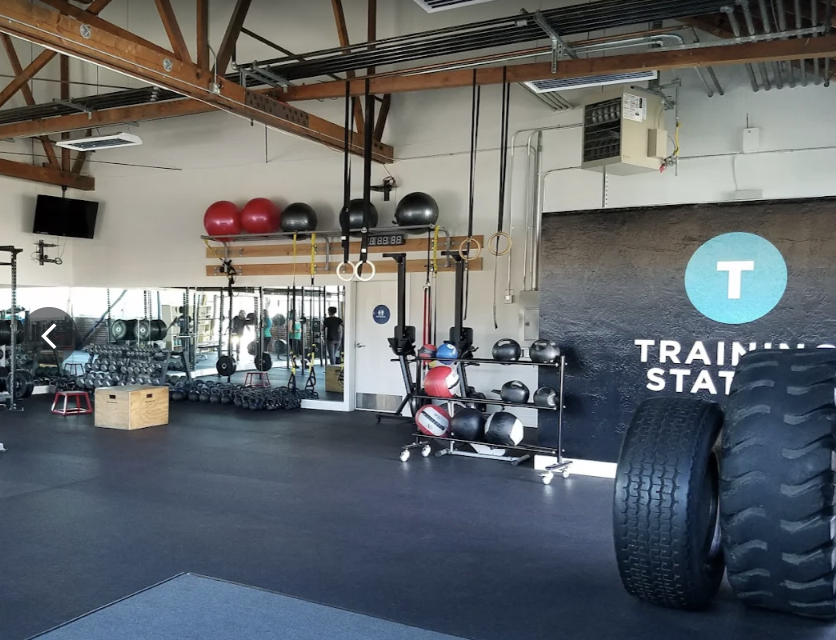
That’s where a facility like the Training Station fits.
Not as a shortcut, and not as a guarantee of success, but as an environment designed to reduce some of the operational friction independent trainers commonly struggle with early on.
One of the biggest advantages is simply having a professional setup already in place. That includes quality equipment, consistent standards, and an environment that supports the level of experience clients generally expect in a market like Alameda.
That matters because it removes a large amount of operational burden early on.
Instead of trying to manage a facility, maintenance issues, equipment problems, setup logistics, and the pressure of carrying a full commercial lease, trainers can focus more of their energy elsewhere.
Trainers can focus more of their energy on:
- coaching
- client results
- retention
- relationship-building
- and creating more consistent income
That usually leads to better long-term decision-making because the business has more room to stabilise before additional complexity is added.
We’ve seen trainers make far better progress once their energy stops going into simply trying to hold everything together operationally and starts going back into coaching, retention, and building relationships properly.
Standards also matter more than many trainers initially expect.
One of the realities of independent training is that the people and environment around you inevitably influence how your business is perceived. When standards are inconsistent, it tends to affect professionalism, client confidence, and the overall experience attached to your coaching.
An environment with clear standards and professionalism creates far more stability for both trainers and clients.
And ultimately, that’s what most successful independent trainers are actually trying to build.
Not independence purely for the sake of independence, but a business that feels professional, sustainable, and capable of growing without constant financial or operational pressure.
That’s why one of the most important mindset shifts for independent trainers is this:
The goal early on isn’t just independence — it’s building independence in a sustainable way.
And in many cases, the environment you build inside plays a much bigger role in that process than trainers initially realise.
FAQ — Renting Training Space in Alameda
Is renting training space worth it for personal trainers?
Yes. Renting training space can work extremely well for personal trainers who want more independence without taking on the financial pressure and operational complexity of opening their own studio. For many trainers, it creates a good middle ground between working inside a commercial gym and running a full facility themselves. It allows them to build their own client base, operate more independently, and increase income potential while keeping overhead significantly lower than managing an entire studio.
How many clients do I need before renting gym space?
Most personal trainers benefit from having around 15–20 consistent clients and relatively predictable monthly income before renting training space independently. The exact number varies depending on pricing and expenses, but the more important factor is whether the business can comfortably support fixed monthly costs without creating constant financial pressure. Trainers who move too early often end up operating reactively because the business hasn’t stabilised yet.
What should personal trainers look for in a training facility?
Personal trainers should look for a training facility that supports the type of business and client experience they want to build long-term. That usually includes professionalism, quality equipment, cleanliness, scheduling flexibility, consistent standards, and an environment that aligns with the type of clientele they want to attract. In practice, the facility becomes part of the client experience, so choosing the right environment matters far more than many trainers initially realise.
Is cheap gym space a bad idea?
Cheap gym space is not automatically a bad idea, but lower-cost facilities can sometimes create indirect problems if the environment feels overcrowded, poorly maintained, inconsistent, or unprofessional. In many cases, trainers discover that saving money upfront can lead to weaker retention, lower perceived value, pricing pressure, and difficulty attracting the type of clients they actually want long-term. The cheapest option is not always the most sustainable option.
Can trainers succeed without opening their own gym?
Yes. Many successful independent trainers build stable and profitable businesses without ever opening their own gym or studio. Renting training space allows trainers to focus more heavily on coaching, client relationships, retention, and business growth without taking on the full operational burden and financial risk associated with managing an entire facility. For many trainers, that model is actually more sustainable long-term than opening a studio too early.
Bottom Line
Renting training space can work extremely well for independent personal trainers in Alameda.
For many trainers, it creates the best balance between independence, flexibility, manageable overhead, and the ability to build a business without taking on the full financial and operational pressure of opening a studio too early.
But over time, it becomes clear that success usually depends far less on the space itself and far more on the decisions made around it.
The trainers who tend to struggle are often the ones who move too early, operate reactively, underestimate the business side of independence, or choose environments that don’t support the type of business they’re actually trying to build.
The trainers who succeed usually approach things differently.
They build gradually. They think long-term. They focus heavily on professionalism, retention, client experience, and creating consistency before adding more complexity or financial pressure.
Most importantly, they understand that renting training space is not simply about finding somewhere to coach clients.
It’s about creating the foundations for a stable, sustainable independent business.
And over time, one pattern tends to become very clear:
The trainers who succeed independently usually treat renting space as the beginning of building a real business — not simply a change of location.
Ultimately, most of the biggest mistakes trainers make when renting training space in Alameda come from trying to grow too quickly before the business itself is stable enough to support it.
What to Do Next
If you’re considering renting training space in Alameda, the most useful next step is usually not making a rushed decision.
It’s getting clear on where your business actually is right now, what type of environment supports your goals, and whether your current setup is helping or limiting your long-term growth.
For many trainers, that clarity comes much faster once they see a professional independent training environment in person and have a realistic conversation about what operating independently actually looks like day to day.
If you want to explore that further, the next step is simple:
See If Training Station Is Right for You
You’ll have the opportunity to:
- tour the facility
- ask questions about how the model works
- understand what operating independently actually involves
- and see whether the environment aligns with the type of business you want to build
There’s no pressure to commit. The goal is simply to help you make a better long-term decision based on where you are right now rather than where you feel you “should” be.
If you’re still earlier in the process, our free guide is also a good place to start.
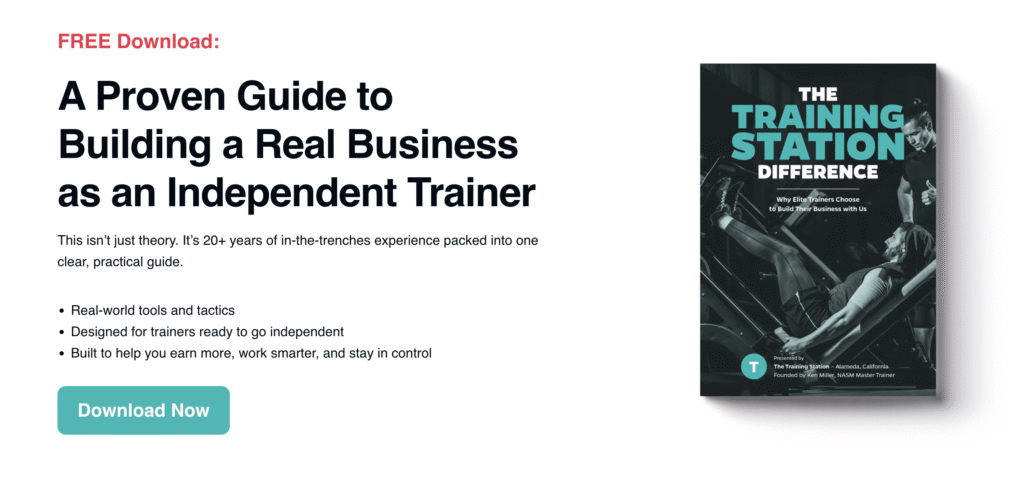
It walks through many of the realities involved in building a stable independent training business, including:
- client growth
- positioning
- professionalism
- pricing
- retention
- and avoiding the mistakes that tend to create pressure too early
Because ultimately, the goal isn’t simply becoming independent.
It’s building independence in a way that’s sustainable long-term.