

Hi, I’m Ken Miller. I help personal trainers take control, grow their businesses, and thrive, backed by 30+ years of real-world experience.
The best gyms for independent personal trainers in Alameda aren’t defined by price or popularity — they’re defined by how well they support long-term, independent coaching businesses.
Choosing the Right Gym as an Independent Trainer in Alameda Isn’t a Small Decision
If you’re an independent personal trainer in Alameda trying to decide where to train your clients, the wrong choice won’t just cost you rent.
It can cost you:
- Client trust
- Income stability
- Professional credibility
- And, over time, your enthusiasm for the business you worked hard to build
I’ve seen talented trainers struggle—not because they weren’t good at coaching, but because they chose a training environment that didn’t support the way they wanted to work.
This article isn’t about promoting one gym over another.
It’s about helping you make the right decision for your stage of independence.
By the end, you should be clear on:
- The real options available to independent trainers in Alameda
- The trade-offs that come with each
- And which type of gym actually supports the kind of business you want to run
There is no single “best gym” for every trainer.
But there is a best option depending on how serious you are about independence.
To make a clear decision, we first need to be precise about what “best” actually means in the context of an independent training business.
Table of Contents
What Does “Best Gym” Actually Mean for Independent Trainers?

When trainers ask me, “What’s the best gym to work from?”
My first response is usually another question:
Best for what?
Most gyms market themselves around:
- Equipment
- Square footage
- Amenities
- Price
Those things matter—but they are not what determines whether your business thrives.
For independent trainers, “best” usually comes down to five practical criteria:
- Client ownership – Do you own the relationship, or does the gym?
- Financial predictability – Can you reliably forecast your income and expenses?
- Autonomy – Can you control your schedule, pricing, and programming?
- Professional standards – Does the environment reflect the level of service you want to provide?
- Long-term sustainability – Can you still see yourself working this way two or three years from now?
If a gym looks great on the surface but undermines one or more of these, it often becomes a bottleneck rather than a foundation.
That’s why comparisons based purely on price or popularity usually miss the point entirely.
Working from Commercial Gyms in Alameda

A Viable Starting Point—With Clear Limits
Commercial membership gyms are often where trainers first get experience, and in some cases, where they first consider going independent.
These gyms typically operate on an:
- Employment model, or
- Contractor model with revenue splits
For certain trainers, this environment can make sense.
Examples of Commercial Gyms Trainers Commonly Consider in Alameda
When independent trainers in Alameda look for places to work, commercial membership gyms are often the most visible option.
These facilities are primarily designed for general membership and group fitness, with personal training operating inside the gym’s broader business model.
Common examples in Alameda include:
- Crunch Fitness — A large membership gym offering classes and personal training, where trainers typically work within the gym’s internal systems and policies.
- Orangetheory Fitness — A franchise-based group training model; generally an employment-style environment rather than a base for independent trainers.
- Alameda Fitness & Spa (also known as Mariner Square Athletic Club) — A broad, member-focused facility with classes, equipment, and amenities.
- Anytime Fitness — A 24/7 access gym serving general fitness members; not structured around independent trainer businesses.
These gyms can be a useful starting point, particularly for trainers early in their careers.
Over time, however, many independent trainers find that the constraints of a membership-first model shape how far their business can grow.
With that context in mind, there are situations where this model works well.
When Commercial Gyms Can Be the Right Fit
Commercial gyms are often a reasonable option if:
- You don’t yet have your own clients
- You value built-in structure and foot traffic
- You’re still developing confidence as a coach
- You prefer a predictable, managed environment
For early-stage trainers, the exposure and support can be valuable.
The Trade-Offs Most Trainers Eventually Face
However, as trainers become more experienced, common challenges start to surface:
- Limited autonomy – Schedules, pricing, and policies are often controlled by the gym
- Revenue ceilings – Income is capped by splits, commissions, or preset rates
- Client ownership issues – Clients are frequently seen as the gym’s, not yours
- Professional constraints – You’re working in a member-first environment, not a coach-first one
None of these are “wrong.” But together, they define a ceiling.
The Honest Judgment
Commercial gyms are often best viewed as:
- A starting point
- Or a place for trainers who prefer structure over independence
They tend to work less well for trainers who:
- Already have established clients
- Want control over their business model
- Are thinking seriously about long-term independence
For many trainers I’ve worked with, commercial gyms eventually become something to grow out of, rather than build from.
Shared or Boutique Training Studios
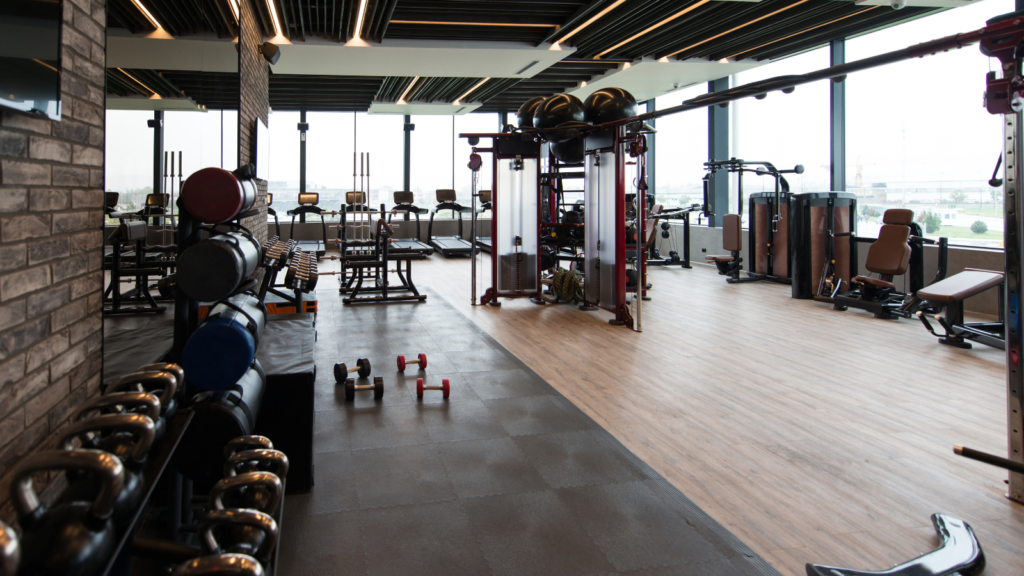
Where Independence Looks Right on Paper—But Gets Complicated in Practice
For many trainers leaving commercial gyms, shared or boutique training studios feel like the logical next step.
They offer:
- More freedom than a big-box gym
- Fewer rules
- A sense of independence without the risk of opening your own space
On the surface, this can look like the “best of both worlds.”
In practice, this is where many independent trainers stall longer than they expect.
The challenge isn’t quality—it’s consistency and scalability.
Examples of Boutique or Shared Training Studios Trainers Explore in Alameda
For trainers who want more independence than a commercial gym provides, boutique or shared training studios often feel like the next logical step. These spaces tend to be smaller, more specialised, and more flexible — though the structure varies widely.
In Alameda, trainers often look at options such as:
- RISE ‘N’ GRIND FITNESS — A personal training–focused boutique environment with a strong local following.
- Anchor Strength — A specialised strength studio with a specific training methodology and collaborative feel.
- All in One Fitness Training Lab — A smaller training space with solid reviews and a trainer-friendly reputation.
- Navarro Fitness Center — An intimate, trainer-led personal training facility.
- The Mission HQ — A well-reviewed fitness space with a strong community atmosphere.
- The Island Personal Training & Massage — A small, niche operation combining personal training and bodywork.
These studios can work well as transitional environments.
The key difference between them is not quality, but how much structure, consistency, and long-term scalability they provide for independent trainers.
Why Shared Studios Are Appealing
Shared or boutique studios typically operate on:
- Hourly rental
- Per-session fees
- Or simple flat monthly rent
They often attract trainers who:
- Already have some clients
- Want more control over their schedule
- Are testing independence without committing fully
And to be fair, for the right trainer at the right moment, this can work.
The Friction Trainers Don’t Anticipate
Over time, a consistent set of issues tends to emerge:
- Scheduling conflicts – Popular time slots get crowded, forcing compromises
- Inconsistent standards – Equipment use, cleanliness, and professionalism vary widely
- Client experience gaps – What feels “fine” to a trainer can feel chaotic to a client
- Hidden costs – Cheap hourly rates add up fast once your schedule fills
- Isolation – Independence without structure can quickly become fragmentation
None of these are deal-breakers individually.
Together, they often create drag.
The Pattern I See Most Often
The trainers who struggle in shared studios aren’t bad coaches.
They’re usually trainers who:
- Care deeply about client experience
- Are trying to build something stable
- Want to grow without chaos
What catches them off guard is that independence without standards still has a cost—it just shows up later, in stress, scheduling friction, and client perception.
The Honest Judgment
Shared or boutique studios tend to work best for:
- Trainers transitioning out of commercial gyms
- Trainers with lighter schedules
- Trainers who want flexibility more than consistency
They tend to work less well for trainers who:
- Are close to full
- Want predictable systems
- Care about presenting a consistently professional environment
- Are thinking in terms of years, not months
For many trainers, shared studios are a transitional phase—useful, but not where they want to stay long-term.
And that’s usually the point where the decision becomes less about “finding space” and more about choosing the kind of business you want to run.
Opening Your Own Training Studio

Total Control—With Responsibilities Most Trainers Underestimate
After working in commercial gyms or shared studios, many independent trainers start to think:
“If I’m going to do this properly, maybe I should just open my own place.”
On paper, opening your own studio looks like the ultimate form of independence:
- Full control over your schedule
- Full control over your brand
- No sharing space
- No compromises
For some trainers, this is absolutely the right move.
For many others, it’s a step taken too early—and for the wrong reasons.
Why Opening a Studio Is So Tempting
Trainers usually consider opening their own space because they want:
- Complete autonomy
- A consistent client experience
- A space that reflects their standards
- To stop working around other people’s rules
Those motivations are valid.
The issue isn’t why trainers want their own studio.
It’s what the decision actually entails.
The Real Costs Go Beyond Rent
Most trainers focus on lease cost and equipment.
That’s only part of the picture.
Opening your own studio also means taking on:
- Long-term lease commitments
- Build-out and maintenance
- Insurance, utilities, cleaning, repairs
- Scheduling, cancellations, and admin
- Being the person who fixes everything when something goes wrong
Even small studios demand time and attention that has nothing to do with coaching.
For trainers who want to coach—and keep coaching—that trade-off matters.
When Opening Your Own Studio Makes Sense
Opening a studio tends to work best when:
- You have a full or near-full client roster
- Your income is stable and predictable
- You’re comfortable with business overhead and risk
- You’re prepared to manage space, not just sessions
At that point, a studio can be a strategic investment.
When It Often Becomes a Burden
It tends to be a mistake when:
- You’re still growing your client base
- Your income fluctuates month to month
- You underestimate the admin and stress
- You want freedom but end up creating another job
I’ve seen capable trainers burn out not from coaching—but from running a space before they were ready to run one.
The Honest Judgment
Opening your own studio isn’t a badge of success.
It’s a business decision with long-term consequences.
For some trainers, it’s the right destination.
For others, it’s a detour that adds pressure before it adds freedom.
The key question isn’t:
“Can I open my own place?”
It’s:
“Do I want to spend my energy running a space—or building my practice?”
Training Station

A Professional Home for Independent Trainers
A Dedicated Independent Training Space in Alameda
In Alameda, there is currently one facility designed specifically around the independent trainer model rather than a membership or shared-use approach.
That facility is Training Station.
Training Station was built for trainers who have moved beyond employment-style gyms and informal shared studios, but who don’t want the overhead and operational burden of running their own facility.
Rather than adapting a general fitness space to fit independent training, the environment is purpose-built around a small set of non-negotiables:
- Trainer autonomy
- Clear professional standards
- Predictable costs
- Long-term sustainability
This positions Training Station differently from commercial gyms and boutique studios — not as a “better” option in general, but as a different category designed for established independent trainers who want a stable professional base.
Why Training Station Exists
Training Station exists because many independent trainers reach a point where neither commercial gyms nor shared studios fully support the kind of business they want to run.
It is not designed to be:
- The cheapest option
- A starting point for brand-new trainers
- A loosely structured, come-and-go environment
Instead, it solves a specific problem:
how to give established independent trainers a professional, stable base without the burden of facility ownership.
What Training Station Is Built For
At its core, Training Station is structured to protect the coaching experience — for both trainers and clients.
That shows up in a few practical ways:
- Trainer autonomy: You own your clients, your schedule, and your programming
- Predictable costs: No revenue splits, no surprise fees, no guesswork
- Professional standards: Clear expectations around space use, cleanliness, and client experience
- Consistency: Your clients walk into the same environment every session
This isn’t about control.
It’s about removing friction so trainers can focus on coaching.
Why Some Trainers Thrive Here
Training Station tends to work best for trainers who:
- Already have an established client base
- Want to focus on coaching rather than managing space
- Care about presenting a consistently professional environment
- Are thinking in terms of long-term sustainability, not short-term savings
These are usually trainers who have already tested independence and learned what doesn’t scale well for them.
Where Training Station Is Not the Right Fit
Just as important, Training Station is not ideal if:
- You’re still relying on gym foot traffic for leads
- You want the lowest possible rent regardless of trade-offs
- You prefer a casual or loosely structured environment
- You’re experimenting with coaching rather than building a practice
At that stage, other options often make more sense — and that’s okay.
The Honest Judgment
Training Station isn’t meant to replace every other option.
It exists to serve a specific type of independent trainer at a specific point in their business.
For trainers who want:
- Independence without chaos
- Autonomy without isolation
- Professionalism without ownership overhead
It often becomes a place they can see themselves working from for years — not just months.
Comparing Your Options at a Glance

At this stage, most independent trainers aren’t missing information — they’re missing clarity.
A side-by-side comparison helps strip the decision back to what actually matters once you’re serious about independence.
Seeing these differences side by side often makes the decision clearer than any individual description.
| Criteria | Commercial Gyms | Shared / Boutique Studios | Training Station |
| Business Model | Employment or contractor model inside the gym’s system | Hourly or monthly rental in a shared space | Independent trainer model built around autonomy |
| Client Ownership | Gym typically controls or co-owns the client relationship | Varies by studio; often informal or unclear | Trainer fully owns and manages client relationships |
| Pricing Structure | Revenue splits or commission-based | Hourly or flat rent; costs increase as schedule fills | Transparent, predictable pricing |
| Autonomy & Flexibility | Limited control over schedule, pricing, and policies | More freedom, but dependent on availability | High autonomy with clear systems |
| Professional Standards | Member-first environment; standards vary | Inconsistent across trainers | Consistent, professional environment |
| Best Fit For | Newer trainers seeking structure and foot traffic | Trainers testing independence | Established trainers building a long-term practice |
| Primary Trade-Offs | Income ceiling, limited independence | Scheduling friction, inconsistent experience | Not entry-level; higher expectations |
This table isn’t about finding the “best” option in general.
It’s about identifying:
- Where you are now
- What you value most
- What you’re willing to trade
For many trainers, the right choice becomes obvious once those trade-offs are visible.
The Biggest Mistake Independent Trainers Make When Choosing a Gym

The most common mistake I see independent trainers make isn’t choosing the “wrong” gym.
It’s choosing based on short-term convenience instead of long-term sustainability.
That usually shows up as:
- Prioritising the lowest hourly rate
- Choosing flexibility without structure
- Delaying a harder decision by telling themselves, “This will do for now”
In the moment, those choices feel sensible.
Over time, they quietly create friction.
Why This Mistake Is So Easy to Make
When you’re building an independent practice, your attention is split:
- Coaching clients
- Managing income
- Filling your schedule
- Keeping overhead low
It’s natural to optimise for what feels safest and cheapest today.
The problem is that training environments compound.
What feels manageable at:
- 8–10 sessions a week
often becomes a liability at:
- 20–30 sessions a week
That’s when trainers start to feel:
- Constant scheduling stress
- Inconsistent client experiences
- Mental fatigue from adapting every session
- Pressure to “make do” rather than work cleanly
What the More Successful Trainers Do Differently
The trainers who build stable, long-term practices tend to reverse the logic.
Instead of asking:
“What’s the cheapest place I can train right now?”
They ask:
“What environment will still support me when my schedule is full?”
That shift changes the decision entirely.
It brings factors like:
- Predictability
- Professional standards
- Client perception
- Energy management
back into focus.
The Honest Judgment
There’s nothing wrong with transitional choices.
But staying in a transitional setup for too long is where problems start.
The gym you choose isn’t just a place to train.
It becomes part of how clients experience you — and part of how sustainable your business feels day to day.
Choosing with the next stage in mind, not just the current one, is often the difference between independence that feels freeing and independence that slowly feels exhausting.
Avoiding that mistake starts with choosing an environment that actually matches how you want to work.
How to Choose the Right Option for You

At this point, the decision usually isn’t about what exists — it’s about where you are.
Rather than asking which gym is “best,” the more useful question is:
Which environment supports the way I want to work right now — and where I’m heading next?
Here’s a simple way to think it through.
Step 1: Be Honest About Your Current Stage
Start with your reality, not your aspiration.
Ask yourself:
- How many active clients do I have right now?
- Is my schedule mostly full, or still fluctuating?
- Am I still relying on foot traffic or referrals from a gym?
If you’re still building your client base, environments with structure and exposure can make sense.
If you’re already established, those same environments can become limiting.
Step 2: Decide How Much Control You Actually Want
Independence looks different for different trainers.
Consider:
- Do I want to set my own prices without restriction?
- Do I want full control over my schedule and programming?
- Do I want my clients to see my business — not a gym’s brand?
If autonomy matters to you, it needs to be supported structurally, not just promised.
Step 3: Think About Your Energy, Not Just Your Income
This is the step many trainers skip.
Ask:
- How much mental energy do I want to spend managing space issues?
- Do I want to solve problems unrelated to coaching?
- What environment helps me stay focused and consistent?
An option that looks cheaper financially can cost more in stress and attention over time.
Step 4: Choose for Sustainability, Not Convenience
Short-term solutions often feel safer.
Long-term ones usually feel clearer.
Try reframing the decision:
- “Where can I see myself working a year from now?”
- “What environment would still work if my schedule filled up?”
If an option only works while things are quiet, it’s probably transitional by nature.
The Honest Takeaway
There’s no single right answer — but there is a right fit for your current stage.
Trainers who choose well tend to:
- Match the environment to their level of independence
- Accept trade-offs consciously
- Avoid staying in “temporary” setups longer than needed
Clarity at this stage doesn’t come from finding the perfect gym.
It comes from choosing the environment that supports the kind of practice you want to build next.
Frequently Asked Questions Independent Trainers Ask Before Choosing a Gym
These are the questions that usually come up after a trainer has read through the options and is close to making a decision.
Do my clients need a gym membership?
In some environments, yes. In others, no. This matters more than many trainers realise. When clients are required to hold memberships, the relationship subtly shifts from your service to the gym’s offering. For trainers building an independent practice, that distinction is important. If owning the full client experience matters to you, it’s worth clarifying this early.
What happens if I don’t fill all my available sessions?
This is where pricing structure matters more than headline cost. Hourly or per-session models feel flexible at first, but they often become unpredictable as your schedule changes. Fixed, transparent pricing removes some upside—but it also removes constant recalculation and stress. The right model depends on whether you value flexibility or predictability more at your current stage.
Can I bring my existing clients with me?
In most cases, yes—but how smooth that transition feels depends on the environment. Clients notice how professional the space feels, how consistent sessions are, and whether they feel like they’re “visiting a gym” or “seeing their trainer”. A change of location can strengthen your positioning—or undermine it—depending on how it’s handled.
What if my business grows?
This is one of the most important questions to ask upfront. Some options work well when you’re training a few clients a week, but create friction as you scale:
scheduling conflicts, space limitations, and inconsistent availability. Thinking ahead doesn’t mean committing prematurely—it means avoiding a move you’ll need to undo six months later.
Is this a long-term solution, or a stepping stone?
Neither answer is wrong. The mistake is assuming a stepping stone will feel comfortable indefinitely. If you view an option as temporary, it’s worth being honest with yourself about. How long “temporary” really is? What would trigger the next move? Whether staying too long would hold you back? Clarity here prevents frustration later.
Where This Leaves You

By now, you should have a clearer sense of:
- What kind of training environment suits your current stage
- Which trade-offs you’re comfortable making
- And which options align—or clash—with how you want to work
There’s no universal best choice.
But there is a choice that fits your level of independence right now.
If you find yourself leaning toward an environment built around trainer autonomy, consistency, and long-term sustainability, the next step is usually a conversation—not a commitment.
That conversation tends to answer what no article can:
whether the fit is right in practice, not just on paper.
Final Thoughts: Choosing the Right Place to Build Your Practice
If there’s one thing I hope this comparison has made clear, it’s this:
There isn’t a single “best gym” for every personal trainer in Alameda.
There is a best environment for the stage of independence you’re in.
Commercial gyms can be a solid starting point.
Shared studios can work as a transition.
Opening your own space can make sense at the right time.
And for trainers who already have clients, value professionalism, and want to focus on coaching rather than managing space, a purpose-built independent training environment often becomes the most sustainable option.
That’s exactly the type of trainer Training Station was built for.
Not everyone.
Not beginners.
Not trainers looking for the cheapest possible option.
But independent trainers who want:
- Full ownership of their client relationships
- Predictable costs
- A consistent, professional environment
- And a place they can see themselves working from long-term
If you’ve read this and found yourself nodding along, the next step isn’t a commitment.
It’s simply a conversation.
Most trainers who end up working from Training Station start by asking a few practical questions, seeing the space, and deciding—calmly—whether the fit feels right in practice, not just on paper.
If that’s where you are, you can explore that next step here.
→ Start here: https://trainingstation.org/start/
If you’re not quite ready to decide yet, but want a clearer picture of what building a sustainable independent training business actually looks like, Ken has put together a practical guide based on 20+ years of experience.
→ Download the free guide here: