


Hi, I’m Ken Miller. I help personal trainers take control, grow their businesses, and thrive, backed by 30+ years of real-world experience.
How much should I charge as a personal trainer in Alameda?
If you’re asking how much should I charge as a personal trainer in Alameda, California, the answer depends on more than just your experience — it’s about how you position yourself, who you serve, and where you train.
Most personal trainers in Alameda charge between $90 and $150 per session, with experienced independent coaches earning $150 to $250 or more depending on specialization, service model, and where they train.
But pricing your personal training services isn’t just about picking a number based on experience. It’s about how you position yourself, who you serve, and whether your business model supports long-term growth.
Many trainers struggle with pricing because it feels risky.
Charge too little and you end up overworked, underpaid, and burned out. Charge too much—at least on paper—and it can feel like you’re pushing clients away.
As a result, most personal trainers in the Bay Area undervalue their services, even in a region where clients expect and are willing to pay for quality coaching.
In Alameda, where the cost of living is high and demand for personalized fitness continues to grow, trainers who structure their business correctly can earn premium rates without working excessive hours.
The difference isn’t talent—it’s clarity around pricing, positioning, and independence.
At Training Station Alameda, we believe pricing should create freedom, not financial pressure.
Whether you’re a newly certified trainer preparing to go independent or an experienced coach tired of giving up a large percentage of your income to commercial gyms, understanding what to charge is the foundation of a sustainable training career.
In this guide, you’ll learn:
- What personal trainers in Alameda actually charge, based on real local ranges
- The key factors that influence pricing, including experience, specialization, and training format
- How to set rates that are competitive, profitable, and aligned with your goals
- Common pricing mistakes that limit income and how to avoid them
- Practical strategies to justify premium pricing so clients clearly understand your value
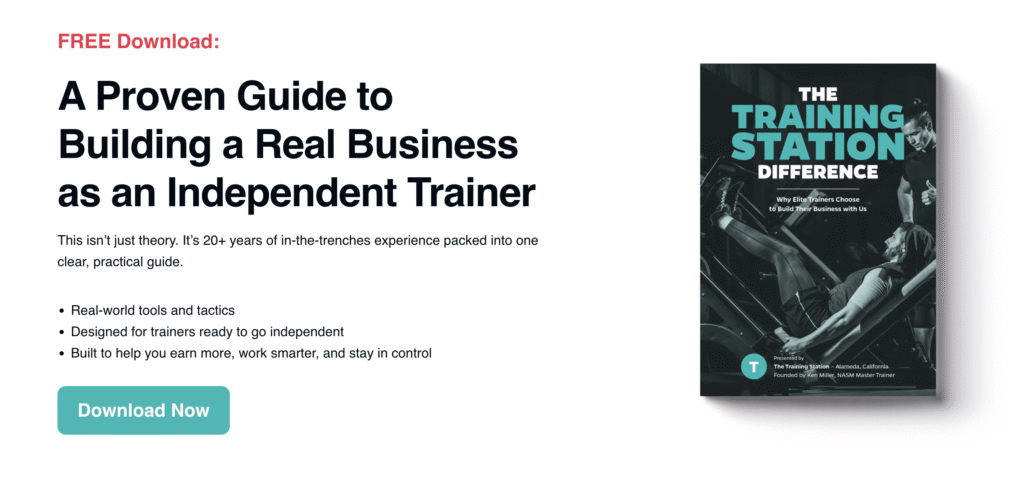
If you’re considering independence and want a clear roadmap, you can also download our free guide, The Step-by-Step Guide to Becoming a Successful Independent Trainer, and start building a training business designed for long-term success at Training Station Alameda.
How Much Should I Charge as a Personal Trainer in Alameda? (Local Factors)

Several key factors determine how much you can — and should — charge as a personal trainer in Alameda.
Understanding these will help you position yourself effectively, avoid undervaluing your expertise, and set prices that reflect your real value.
1. Location, Location, Location
Not every part of the Bay Area is priced the same. Trainers working in San Francisco or Walnut Creek often charge more than those in Alameda or Oakland, largely because of rent and demographic differences.
At Training Station Alameda, independent trainers benefit from transparent rental terms — so you keep more of what you earn.
- Independent studios vs. commercial gyms: National chains often take a large cut of your revenue. Independent spaces like Training Station Alameda let you retain 100% of your session fees.
- At-home & outdoor training: Alameda’s parks and waterfront areas make outdoor sessions popular, and you can charge a small premium for the added convenience.
How does location affect pricing?
Local demographics and overheads vary; rates typically rise in higher-income areas and private studio environments.
2. Experience & Qualifications
Your experience level, education, and specialization play a major role in your rates.
| Experience Level | Typical Alameda Rate (per session) |
| Entry-Level (0–2 yrs) | $60 – $90 |
| Mid-Level (3–7 yrs) | $90 – $150 |
| Senior/Expert (7+ yrs or specialized) | $150 – $250+ |
Respected certifications such as NASM, ACE, or NSCA boost credibility. Adding corrective exercise, nutrition, or pre/post-natal expertise helps you command top-tier pricing.
How much do experienced trainers charge?
Mid- to high-level trainers typically charge $90–$250 per session, depending on specialization and demand.
3. Client Demographics
Who you serve matters as much as what you charge.
- Busy professionals in the Bay Area value flexibility and personalized programs.
- Corporate and executive clients will often pay premium rates for convenience and privacy.
- Niche markets—such as strength & mobility for over-50s, pre/post-natal, or athletic performance—allow you to set higher prices because of your expertise.
Understanding your audience helps you match pricing to perceived value rather than simply following what others charge.
4. Training Format and Session Type
Your service model directly affects your earning potential.
- One-on-One Sessions: Offer the highest hourly rate and full client attention.
- Semi-Private Training (2–4 clients): Slightly lower cost per person but greater total revenue per hour.
- Group Classes (5 + clients): Lower individual rates but scalable income.
- Online or Hybrid Coaching: Minimal overhead, ideal for reaching clients beyond Alameda.
Which personal-training format earns the most in Alameda?
Independent trainers typically earn the most through a mix of one-on-one and small-group sessions, balancing premium pricing with efficiency.
5. Overhead Costs and Business Expenses
Setting the right rates requires factoring in your true costs:
- Studio rental: Flat hourly rates or monthly memberships vary, but transparent pricing at Training Station Alameda makes planning simple.
- Insurance & certifications: Maintain professional liability coverage and invest in continuing education.
- Marketing & branding: Your website, social media, and client-management tools all contribute to perceived value.
- Taxes & self-employment expenses: Build these into your hourly rate so you’re never undercutting your profit.
When you understand these costs, you can set rates that support sustainable income—not survival pricing.
Want to maximise your earnings as an independent trainer?
Download The Step-by-Step Guide to Becoming a Successful Independent Trainer and learn how to structure your business for lasting success at Training Station Alameda.
Alameda Personal Trainer Pricing Breakdown (With Real Local Numbers)

Now that you understand the factors influencing your rates, let’s look at what personal trainers in Alameda and the surrounding Bay Area are actually charging.
How much do personal trainers really make in Alameda?
Below is a realistic pricing breakdown based on experience level, training format, and location compared to nearby cities like Oakland and San Francisco.
1. Alameda Personal Trainer Rates by Experience Level
| Experience Level | Price per Session (Low-End) | Price per Session (High-End) |
|---|---|---|
| Entry-Level (0–2 years) | $60 | $90 |
| Mid-Level (3–7 years) | $90 | $150 |
| Senior/Expert (7+ years or specialized) | $150 | $250+ |
| Online/Hybrid Coaching | $100 per month | $400+ per month |
These numbers reflect the independent trainer market across Alameda, Oakland, and Berkeley.
Trainers working out of private studios—like Training Station Alameda—tend to charge toward the higher end of the range, as they keep 100% of their session fees rather than giving a cut to a big-box gym.
How much do personal trainers charge in Alameda, CA?
Most independent trainers charge between $90 and $150 per session, with premium specialists commanding up to $250 or more.
2. Pricing Based on Training Type
| Training Format | Typical Price Range (Per Session) |
| One-on-One | $80 – $250+ |
| Semi-Private (2–4 clients) | $50 – $100 per person |
| Group Training (5+ clients) | $30 – $70 per person |
| Online/Hybrid Coaching | $100 – $400+ per month |
At Training Station Alameda, many independent trainers offer a hybrid model—mixing in-person and online sessions to create consistent revenue and schedule flexibility.
This blended approach can help maximize income while minimizing burnout.
Which personal-training format earns the most in Alameda?
One-on-one sessions and semi-private training typically yield the highest hourly income for independent trainers.
3. How Alameda Compares to Other Bay Area Cities
Alameda offers an attractive balance between affordability for clients and earning potential for trainers. Here’s how local rates stack up:
| City | Average Rate per Session |
| Alameda | $60 – $250 |
| Oakland | $65 – $220 |
| San Francisco | $80 – $300+ |
| San Jose | $70 – $220 |
While San Francisco rates remain the highest due to higher living costs, many trainers and clients are choosing Alameda for its accessibility, community feel, and independent training options.
Is it cheaper to train in Alameda than in San Francisco?
Yes. Trainers in Alameda often offer slightly lower rates while maintaining a high-quality experience, making it an appealing choice for both clients and coaches.
4 Factors That Can Increase Your Rate
Shorter sessions priced at 60–75% of an hour, multi-session bundles, specialized expertise (rehab, S&C), and niche services (corporate wellness, pre/post-natal, over-50) all justify premium pricing.
Several elements can justify premium pricing for your services:
- Session Length: 30-minute sessions usually cost around 60–75% of a full-hour rate.
- Package Deals: Offering multi-session bundles (10 or 20 packs) provides stability and encourages long-term commitment.
- Specialized Expertise: Trainers who focus on rehab, corrective exercise, or strength and conditioning can charge more for their advanced skill set.
- Niche Services: Areas like corporate wellness, pre/postnatal fitness, and over-50 training allow for premium rates due to specialization.
How can personal trainers in Alameda increase their rates?
Developing a niche, packaging services, and showcasing measurable results all help justify higher pricing.
According to the U.S. Bureau of Labor Statistics, demand for fitness trainers continues to grow nationwide, with income varying widely based on specialization, location, and business model.
Want to learn how to structure your business and earn more as an independent trainer?
Download The Step-by-Step Guide to Becoming a Successful Independent Trainer and start building a thriving business with Training Station Alameda.
Gym-Based vs. Independent Trainers – What’s the Real Earning Potential?

One of the biggest decisions every personal trainer faces is where to build their business — under the roof of a commercial gym, independently at a private studio, or through a hybrid model that blends both.
Each path offers different levels of freedom, responsibility, and earning potential.
Here’s how they compare for trainers working in Alameda and the greater Bay Area.
1. Gym-Employed Personal Trainers
Most new trainers start their careers in large chain gyms such as Equinox, Crunch, or 24 Hour Fitness. These facilities offer built-in clients and brand recognition, but the trade-off is limited control and capped income.
Pros
- Access to a consistent flow of members needing training
- No rent, insurance, or marketing expenses
- Access to equipment and corporate resources
- Opportunity for early career mentorship
Cons
- Gyms keep a significant portion of your earnings (often 50–70 %)
- Limited scheduling flexibility
- Hard to raise your rates or choose your clients
- High pressure to hit sales targets
Average Hourly Take-Home: $20 – $50 per session
Best For: New trainers building initial experience and confidence before going independent.
How much do gym-employed trainers make in Alameda?
Most earn between $20 and $50 per hour, keeping only a fraction of what the client pays the gym.
2. Independent Trainers (Renting Space or Mobile Training)
Independent trainers enjoy greater income potential and flexibility, but also assume full business responsibility. Renting space at a facility like Training Station Alameda lets you operate professionally without the limitations of a corporate gym.
Pros
- Keep 100 % of your session fees
- Full control over pricing, schedule, and clientele
- Freedom to develop specialized programs
- Opportunity to build a personal brand and loyal following
Cons
- Responsible for rent, insurance, and marketing
- Must generate your own leads and client base
- Requires stronger business and communication skills
Average Earning Potential: $80 – $250 + per session
Best For: Trainers who value independence and want to scale income on their own terms.
How much can independent trainers make in Alameda?
Independent trainers at private studios such as Training Station Alameda typically earn 2–3 times more than gym-employed trainers because they keep all of their revenue.
3. The Hybrid Model – A Gradual Transition
Some professionals blend both worlds: maintaining part-time hours at a gym while growing an independent client base. This hybrid approach provides financial stability during the transition phase.
Pros
- Steady baseline income while building independence
- Gradual risk reduction and smooth transition
- Continued access to gym facilities and client exposure
Cons
- Conflicting schedules across two environments
- Possible restrictions on outside client work
- Divided focus may slow independent growth
Average Earning Potential: Varies by mix of gym salary and private rates
Best For: Trainers seeking security while testing independent waters.
Is the hybrid model a good option for trainers in Alameda?
Yes. It allows trainers to maintain steady income while building their own brand at local studios such as Training Station Alameda.
4. What’s the Best Choice for You?
- If you’re new to training and need experience: Start in a commercial gym.
- If you want control, freedom, and higher income: Go independent.
- If you want stability while you transition: Adopt the hybrid model.
For most professionals, independence is the end goal — full control, better pay, and the ability to create a brand that reflects your values.
Ready to make the move?
Join Training Station Alameda, the Bay Area’s home for independent personal trainers. Our transparent rental model, community environment, and professional support make it the perfect place to grow your business.
Learn More About Training Station Alameda
How to Set Your Rates with Confidence (And Not Undersell Yourself)

Setting your rates as a personal trainer isn’t just about picking a number — it’s about knowing your worth, understanding your market, and clearly communicating your value to clients.
In Alameda, where independent trainers have more freedom than those tied to big-box gyms, confident pricing is key to building a sustainable and profitable business.
Here’s how to set your rates with confidence and position yourself as a professional who commands respect — not discounts.
1. The Formula for Pricing Your Services
Instead of guessing what to charge, use a proven framework to calculate fair and profitable rates:
(Business Costs + Desired Profit) ÷ Billable Hours = Base Hourly Rate
Here’s how to apply it:
- Calculate Your Monthly Business Expenses — include rent, insurance, marketing, software, and continuing education.
- Set a Profit Goal that reflects your desired take-home income.
- Determine Your Billable Hours Per Week — account for cancellations, holidays, and personal time.
- Divide Your Total Costs by Your Available Hours to find your baseline rate.
- Adjust for Market Demand in Alameda and the Bay Area.
Example:
If your monthly business expenses are $3,000 and you want to earn $6,000 in profit, your total revenue target is $9,000.
If you train 25 billable sessions per week, you’ll need to charge at least $90 per session to meet your goal.
How do I calculate what to charge as a personal trainer in Alameda?
Add your expenses and desired profit, divide by available hours, and adjust based on demand — this gives you a clear, confident rate.
2. Common Pricing Mistakes to Avoid
Many personal trainers in the Bay Area leave money on the table because of simple pricing mistakes. Here’s what to watch out for — and how to fix it.
Mistake 1: Charging Based on Fear Instead of Value
Setting your prices too low signals low confidence and low value. Clients often equate cost with quality.
Solution: Price based on the transformation you deliver, not the time you spend.
Mistake 2: Not Raising Your Rates Over Time
Costs rise — and your experience grows. If your rates haven’t changed in years, it’s time to adjust.
Solution: Increase rates for new clients every 12–18 months to match your skill level and inflation.
Mistake 3: Offering Too Many Discounts
Constant discounts devalue your expertise and attract the wrong clients.
Solution: Instead of discounting, offer value-adds like a free assessment or follow-up session.
Mistake 4: Not Creating Clear Pricing Packages
Hourly sessions make income unpredictable.
Solution: Offer structured packages (e.g., 10-session bundles or monthly memberships) to build commitment and cash flow stability.
What are the most common pricing mistakes personal trainers make?
Undercharging, failing to raise rates, over-discounting, and lacking structured packages are the biggest pitfalls.
3. How to Justify Premium Pricing
Clients don’t pay for workouts — they pay for results, accountability, and transformation. To confidently charge premium rates, focus on communicating value:
- Highlight Your Expertise: Certifications, specializations, and results show authority.
- Sell the Transformation, Not the Hour: Position your training as an investment in long-term health and confidence.
- Use Social Proof: Client success stories and testimonials justify higher rates.
- Communicate Beyond the Workout: Emphasize coaching, programming, recovery, and accountability.
- Add Premium Services: Recovery sessions, nutrition guidance, or performance tracking all increase perceived value.
How do I justify charging higher rates as a trainer?
Show the value beyond workouts — emphasize your expertise, results, and personalized support.
4. How to Communicate Your Rates Confidently
Talking about money can feel uncomfortable, but confidence in your pricing builds trust. Here’s how to handle it like a pro:
- Be Transparent: Share your pricing upfront during consultations or on your website.
- Use Value-Based Framing: Instead of saying “I charge $150 per session,” say “For $150, you get a customized plan, accountability, and expert guidance that delivers results.”
- Offer Tiered Options: Give clients choice — for example, 1-on-1 sessions, semi-private options, or hybrid online programs.
- Rehearse Your Conversation: Practicing how you discuss pricing removes hesitation and projects confidence.
Nationally recognized certifications such as NASM also emphasize pricing based on value, experience, and client outcomes rather than hourly labor alone.
If you can clearly articulate the outcome you help clients achieve (and your process for getting them there), higher rates become easier to justify.
How do I confidently discuss my rates with clients?
Be direct, focus on value, and practice your delivery — confidence sells trust.
Want to confidently set premium rates and attract clients who value your expertise?
Download The Step-by-Step Guide to Becoming a Successful Independent Trainer and learn how to build a profitable business at Training Station Alameda.
Marketing Yourself to Justify Premium Pricing

Charging premium rates isn’t about simply setting higher prices — it’s about clearly demonstrating why your coaching is worth more.
When you communicate your value through strong branding, credible positioning, and consistent visibility, clients see you as a trusted professional, not a commodity.
Here’s how to make that happen.
1. Build a Strong Personal Brand
Your brand is more than a logo; it’s the perception clients form about who you are and the results you deliver.
A well-defined brand builds authority, trust, and loyalty — all of which justify higher pricing.
- Professional Website: Create a clean, mobile-friendly site with service descriptions, testimonials, and clear calls to action.
- Consistent Social Presence: Share educational content, client wins, and behind-the-scenes glimpses of your coaching style.
- Clear Messaging: Define your Unique Selling Proposition — why should someone train with you instead of anyone else in Alameda?
- Niche Positioning: Specialists earn more. Whether your focus is strength training, functional fitness for 50+, or pre/post-natal coaching, owning a niche helps you stand out.
How can a personal trainer in Alameda build a strong brand?
By developing clear messaging, consistent content, and visible proof of expertise, you attract clients who value quality over price.
2. Leverage Local SEO to Attract High-Value Clients
Search visibility drives high-paying leads. When someone searches “personal trainer in Alameda,” your brand should appear among the top results.
- Optimize Your Website: Use phrases like personal trainer Alameda or independent trainer Bay Area in your titles, headings, and meta descriptions.
- Google Business Profile: Claim and fully optimize it with updated photos, services, and client reviews.
- Local Directories: Add listings on Yelp, Nextdoor, and other regional fitness directories to expand reach.
- High-Value Blog Content: Publish educational articles such as How Much Should I Charge as a Personal Trainer in Alameda? or Top Strength Training Programs for Busy Bay Area Professionals.
How can I attract more high-paying clients as a personal trainer in Alameda?
Optimize for local search, gather strong reviews, and consistently publish content that answers client questions.
3. Use Social Proof and Client Testimonials
Evidence builds trust. Show prospective clients real results and genuine stories.
- Success Stories: Highlight before-and-after progress or detailed client case studies.
- Video Testimonials: Simple clips of clients sharing their experience can outperform ads.
- Certifications and Media Features: Display your NASM, ACE, or NSCA credentials and any local media coverage.
- Google and Yelp Reviews: Encourage satisfied clients to post feedback; consistent 5-star reviews directly influence conversions.
Why is social proof important for personal trainers?
It provides credibility and demonstrates that investing in you leads to tangible results.
4. Be Transparent About Pricing
High-quality clients appreciate clarity. Listing your rates upfront filters out price-shoppers and builds confidence.
- Publish Your Pricing: Transparency reflects professionalism.
- Offer Package Options: Provide clear tiers such as one-on-one, semi-private, and hybrid online coaching.
- Frame Pricing as Value: Replace “$150 per session” with “$150 for a customized plan and ongoing accountability to reach your goals.”
Should I list my personal-training prices online?
Yes — transparency positions you as confident and trustworthy, attracting clients who are ready to commit.
5. Build Your Network and Referral System
Networking remains one of the most effective ways to attract premium clients — especially in a connected community like Alameda.
- Collaborate with Local Professionals: Partner with physiotherapists, chiropractors, and nutritionists who share your target clientele.
- Referral Programs: Offer a bonus session or credit for every successful referral.
- Host Workshops and Community Events: Free seminars or movement clinics at Training Station Alameda strengthen your authority and bring in new leads.
How can personal trainers in Alameda get more referrals?
By forming local partnerships, rewarding loyal clients, and creating valuable community experiences.
Ready to market yourself like a high-value professional?
Download The Step-by-Step Guide to Becoming a Successful Independent Trainer and learn how to build authority, attract ideal clients, and grow your income at Training Station Alameda.
Why Personal Training Is a Worthwhile Investment

Many people hesitate to hire a personal trainer because they view it as an expense instead of an investment.
But the right trainer doesn’t just help someone work out — they change how that person moves, feels, and lives.
In Alameda, where health and quality of life are priorities, personal training delivers measurable returns that go far beyond the gym floor.
1. The Health and Longevity Benefits
A personal trainer provides more than workouts; they offer structure, accountability, and expert guidance that create lasting results.
Working with a qualified professional helps clients:
- Improve strength and mobility: Move better, avoid injuries, and maintain independence as you age.
- Increase longevity: Research consistently links strength training to reduced mortality risk and improved quality of life.
- Boost mental health: Regular exercise lowers stress, anxiety, and depression while improving mood and confidence.
- Enhance cardiovascular fitness: Training helps lower blood pressure, improve heart health, and raise overall endurance.
- Create sustainable habits: A good trainer replaces quick fixes with lifelong fitness routines.
Takeaway: Personal training doesn’t just improve fitness — it enhances longevity, confidence, and well-being.
What are the main benefits of personal training in Alameda?
Improved strength, mobility, and mental health lead to longer, more active lives.
2. Cost Comparison: Training vs. Healthcare Costs
When viewed as prevention, personal training becomes one of the most cost-effective health investments available.
| Expense | Average Cost |
| Personal Training (3× per week) | $800 – $1,500 per month |
| Gym Membership | $100 – $300 per month |
| Physical Therapy | $150 – $300 per session |
| Chiropractor | $75 – $200 per session |
| Medical Bills (heart disease, diabetes, obesity-related issues) | $10,000 + per year |
Prevention is always cheaper than treatment.
Investing in training now can save thousands in future medical bills and add years of healthier living.
Is personal training worth the money?
Yes — it’s preventive healthcare that costs less than dealing with chronic illness later.
3. Why Clients Pay Premium Rates for Personal Training
Not all trainers offer the same value — and clients who expect results will invest in the best.
High-paying clients choose personal training because it provides:
- Personalization: Each program is tailored to individual goals, needs, and limitations.
- Accountability: Regular sessions ensure consistency and measurable progress.
- Expert Guidance: Top trainers bring specialized knowledge in strength, mobility, and injury prevention.
- Convenience and Efficiency: Busy professionals want optimized sessions that deliver maximum results in minimal time.
- Faster Results: Coaching accelerates outcomes that might take months to achieve alone.
Why do people pay premium rates for personal trainers in Alameda?
Because customized, accountable coaching produces faster, safer, and longer-lasting results.
4. Personal Training as an Investment in Success
Successful professionals see fitness coaching the same way they view business coaching — as an investment that compounds over time.
- Performance ROI: Better health improves focus, productivity, and resilience.
- Long-Term Return: Consistent training reduces healthcare costs and supports an active lifestyle for decades.
- Confidence and Lifestyle Upgrade: Improved strength, posture, and energy elevate both personal and professional life.
Independent trainers at Training Station Alameda help clients achieve these returns by combining science-based programming with personal accountability — delivering outcomes that are worth every dollar.
How is personal training an investment in success?
Healthier bodies create stronger, more confident individuals who perform better in every area of life.
Ready to position your services as a true investment — not an expense?
Download The Step-by-Step Guide to Becoming a Successful Independent Trainer and learn how to build a high-value coaching business at Training Station Alameda.
Common Mistakes That Lower Trainer Rates (And How to Avoid Them)

Setting your rates isn’t just about choosing a number — it’s about making sure you’re not unintentionally undercutting yourself.
Many personal trainers in Alameda and across the Bay Area make simple, avoidable mistakes that limit their income potential.
Here are the biggest pricing pitfalls — and how to fix them.
1. Underpricing Your Services
Mistake: Charging based on fear instead of value.
Many trainers assume that offering the lowest price will attract more clients. In reality, it often does the opposite — it devalues your expertise and signals inexperience.
Solution:
- Research Bay Area market rates and position yourself competitively, not cheaply.
- Consider your experience, certifications, and results when setting prices.
- Offer high-value packages instead of single sessions to demonstrate commitment and transformation.
What happens if I undercharge as a personal trainer?
You attract short-term clients, lower perceived value, and limit long-term income growth.
2. Charging Hourly Instead of Offering Packages
Mistake: Sticking to hourly sessions rather than structured pricing options.
Hourly rates make income unpredictable and fail to encourage client commitment.
Solution:
- Create clear, results-based packages such as:
- Monthly memberships (e.g., $800 for 8 sessions)
- 10-session bundles ($1,200, saving $20 per session)
- 12-week transformation programs for consistent progress
- Monthly memberships (e.g., $800 for 8 sessions)
- Packages increase retention and create reliable revenue.
Why should personal trainers sell packages instead of hourly sessions?
Packages build trust, improve client results, and stabilize your monthly income.
3. Not Raising Your Rates Regularly
Mistake: Keeping your rates the same for years, even as your experience and results grow.
Inflation, rent, and demand all rise — your pricing should reflect that.
Solution:
- Increase rates every 12–18 months for new clients.
- For existing clients, offer a “grandfathered rate” for a set period before adjusting.
- Highlight new qualifications, client transformations, or added value when announcing increases.
How often should I raise my training rates?
A moderate increase every 12–18 months keeps your business sustainable and your value aligned with your growth.
4. Discounting Too Often
Mistake: Using constant discounts to attract clients.
Frequent discounting damages credibility and leads to price-sensitive clients who don’t stay long term.
Solution:
- Replace discounts with value-add incentives such as:
- Free consultations or assessments
- Bonus nutrition or recovery guides
- Access to accountability groups or online support
- Free consultations or assessments
- Focus on demonstrating value rather than lowering prices.
Do discounts hurt a personal trainer’s business?
Yes — over time, discounts weaken brand perception and reduce profitability.
5. Failing to Specialize
Mistake: Being a generalist instead of focusing on a niche.
When you try to serve everyone, you compete on price. Specialists stand out and charge more.
Solution:
- Define your niche — such as strength and mobility for 50+, pre/postnatal fitness, or sports performance.
- Create content (blog posts, videos, social media) that showcases your expertise in that area.
- Position yourself as the go-to trainer in Alameda for your niche.
Why does specialization help trainers charge more?
Clients pay higher rates for experts who understand their exact goals and challenges.
6. Lack of Pricing Transparency
Mistake: Hiding your prices or hesitating to discuss them.
Unclear pricing creates mistrust and makes potential clients assume your services are too expensive.
Solution:
- Clearly list your pricing on your website and social media.
- Be confident when explaining your rates — confidence builds trust.
- Use value-based framing: instead of “$150 per session,” say, “$150 for a customized plan, expert guidance, and accountability.”
Should personal trainers list their prices online?
Yes — transparency filters out unqualified leads and builds credibility with serious clients.
7. Not Tracking Business Metrics
Mistake: Running your business without tracking key metrics like client retention, revenue, and conversion rates. Without data, you can’t identify what’s working — or what’s costing you money.
Solution:
- Use tools like Google Sheets, Everfit, or Trainerize to monitor progress.
- Track monthly revenue, lifetime client value, and retention.
- Set clear income goals and review them quarterly.
Why should trainers track business metrics?
Tracking data helps you set realistic pricing goals and measure growth over time.
Want to avoid these mistakes and build a profitable training business?
Download The Step-by-Step Guide to Becoming a Successful Independent Trainer and take control of your pricing strategy today at Training Station Alameda.
Conclusion – Your Pricing, Your Rules
Setting your rates as a personal trainer in Alameda isn’t just about choosing a number. It’s about knowing your worth, communicating your value, and building a business that supports your life — not the other way around.
When you take control of your pricing, you take control of your freedom.
Key Takeaways
- Trainers in Alameda can charge premium rates when they position themselves as professionals, not session sellers.
- Experience, location, specialization, and session type all shape your pricing strategy.
- Avoid common mistakes such as undercharging, constant discounting, or failing to track performance metrics.
- Transparency builds trust. Clients respect trainers who clearly communicate their prices and deliver on their promises.
- Personal training is an investment. The right clients are always willing to pay for quality, expertise, and consistency.
Your Next Steps
- Review your current pricing. Does it truly reflect your experience, results, and overhead costs?
- Adjust if needed. Set rates that align with your professional value and income goals.
- Communicate with confidence. Talk about money openly — clients value clarity.
- Position yourself as a premium service provider. Focus on transformation, not transactions.
At Training Station Alameda, we believe your pricing should empower you, not restrict you. Our mission is to give independent trainers the freedom to earn fairly, grow sustainably, and build long-term success without hidden fees or confusing contracts.
If you’re ready to take control of your business, join Alameda’s community of forward-thinking independent trainers.
Learn More About Training Station Alameda
Frequently Asked Questions (FAQ)
How much do personal trainers charge per hour in Alameda, CA?
Most personal trainers in Alameda charge between $60 and $250 per session, depending on experience, specialization, and location. Trainers working independently at Training Station Alameda typically earn toward the higher end because they keep 100 percent of their fees instead of splitting revenue with a gym.
What is the average monthly income for personal trainers in Alameda?
Independent trainers in Alameda generally earn between $4,000 and $10,000 per month, depending on the number of sessions they deliver and whether they sell packages or memberships. Coaches with specialized expertise or established client bases often earn more by offering higher-value programs and hybrid online options.
How much should new personal trainers charge in Alameda?
New trainers in Alameda usually start at $60 to $90 per session, which balances affordability for clients with a fair return for the trainer. As experience grows and client demand increases, most professionals raise rates every 12 to 18 months to reflect their results and expertise.
Why do some personal trainers charge premium rates?
Trainers who charge premium rates typically have advanced qualifications, proven results, and highly personalized programs. They offer more than workouts — including accountability, nutrition guidance, and lifestyle support — all of which justify higher pricing. Working from facilities like Training Station Alameda also enhances the client experience and perceived value.
Is personal training worth the investment?
Yes. Personal training is a valuable investment in long-term health, mobility, and quality of life. It reduces the risk of injury, improves physical and mental wellbeing, and helps prevent costly health conditions later. Clients often find that consistent training saves money compared to long-term medical expenses.
Should personal trainers list their prices online?
Yes. Transparent pricing builds trust and filters out clients who are only looking for the cheapest option. Listing your prices online shows professionalism and confidence. At Training Station Alameda, transparency is a core value, helping trainers attract serious clients ready to invest in their goals.
What are the most common pricing mistakes trainers make?
The most common mistakes include undercharging, offering too many discounts, failing to raise rates, and hiding prices. These habits weaken credibility and reduce profitability. Successful trainers in Alameda focus on value, clear communication, and structured pricing that supports both client results and business growth.
How can personal trainers increase their rates without losing clients?
To increase rates successfully, trainers should communicate clearly and explain the added value they provide. Highlight new qualifications, improved programming, or client success stories. When clients understand the transformation they’re investing in, they’re more likely to accept modest, justified price increases.
What’s the best place for independent trainers to grow their business in the Bay Area?
Training Station Alameda is the leading destination for independent personal trainers in the Bay Area. It offers flexible rental options, transparent pricing, and a supportive community where professionals can grow their client base and build long-term success without hidden fees or restrictions.