

Hi, I’m Ken Miller. I help personal trainers take control, grow their businesses, and thrive, backed by 30+ years of real-world experience.
Independent personal trainers in Alameda often assume clients choose them because they’re good at coaching.
Good coaching certainly matters. Without it, you’re unlikely to build a successful business over the long term.
But after more than twenty years in the fitness industry, I’ve learned that coaching ability is rarely the only reason clients decide to stay with you.
Think about the trainers you’ve chosen to work with yourself over the years.
Chances are you don’t just remember the exercises they prescribed or the programs they wrote. You probably remember how they made you feel. You remember whether they listened, whether they turned up prepared, whether they made you feel welcome, and whether you trusted them to help you achieve your goals.
Your clients are doing exactly the same thing.
Long before they see the results of your programming, they’re forming opinions about the experience of working with you.
They notice how quickly you reply to an enquiry. They notice whether appointments start on time. They notice how organised you are, how comfortable they feel asking questions, and whether your training environment reflects the level of professionalism they’re looking for.
These may seem like small details in isolation, but together they shape the impression clients have of your business.
Over the years, I’ve watched talented trainers struggle to retain clients, while others with similar coaching ability built thriving businesses.
More often than not, the difference wasn’t the quality of their exercise programming. It was the quality and consistency of the experience they created around it.
By the time a client recommends you to a friend, they’re usually talking about much more than your coaching. They’re describing how you made them feel, how easy you were to work with, and why they trusted you enough to keep coming back.
That’s why I believe one of the biggest mindset shifts an independent trainer can make is to stop thinking they’re simply delivering workouts and start recognising that they’re delivering an experience.
If you’re still deciding whether becoming independent is the right move, you may also find my guide, Should You Become an Independent Personal Trainer in Alameda?, helpful before reading on.
In this guide, I’d like to share what I’ve learned about what clients really expect from an independent personal trainer, why those expectations matter more than many trainers realise, and how understanding them can completely change the way you build your business.
Key Insight: Clients don’t just evaluate your coaching. They evaluate every interaction they have with your business.
AI Summary
Clients rarely judge trainers on workouts alone. They judge the complete experience. Professionalism, trust, communication and consistency often influence long-term client retention more than programming itself.
Key Takeaways
Before we dive into each of these areas in more detail, it’s worth stepping back and looking at the bigger picture.
Over the years, I’ve found that clients rarely judge a trainer on one thing alone.
Instead, they’re constantly building an overall impression based on every interaction they have with you and your business. Some of those moments happen inside the gym. Many happen long before the first workout ever begins.
The trainers who build long-term, successful businesses usually understand this. They recognise that every email, every consultation, every session, and every conversation contributes to the experience their clients have.
When you look at it through your client’s eyes, the things that matter most are surprisingly consistent.
Clients expect:
- Professionalism from the very first interaction.
- A trainer they can trust and feel comfortable with.
- Clear, consistent communication.
- Reliability and consistency in every session.
- Expertise that gives them confidence in your guidance.
- An overall experience that makes them feel they made the right decision.
None of these replace good coaching. They simply recognise that good coaching is only one part of what clients are investing in.
Professionalism Starts Before the First Workout

One of the biggest misconceptions I come across is that clients judge a personal trainer once the coaching begins.
In reality, they’ve often started making that decision long before they walk through the gym door.
Think about your own behaviour when you’re looking for a professional service.
Whether you’re choosing a dentist, an accountant or a financial adviser, you’re paying attention to far more than their technical ability. You’re noticing how easy they are to contact, whether they reply promptly, whether they seem organised, and whether they make you feel confident that you’re in good hands.
Your clients are no different.
The first impression often begins with something as simple as your website. Is it clear who you help? Does it feel current and professional? Is it easy for someone to take the next step, or does it leave them with more questions than answers?
Then come the small interactions that many trainers overlook. How quickly do you respond to an enquiry? Is your email polite and well written? Does your consultation feel organised, or does it feel like you’re making it up as you go along?
None of these things require expensive software or a large team behind you. They simply require attention to detail and a genuine respect for the person who’s considering trusting you with their health.
The same applies when a client arrives for their first session.
Are you ready before they arrive, or are you still setting equipment up? Do you greet them by name? Have you prepared for the session, or are you deciding what to do once they’ve walked through the door?
These moments may seem insignificant on their own, but together they shape how professional your business feels.
I’ve found that the trainers who build the strongest reputations are rarely those with the most complicated programmes or the longest list of qualifications. More often, they’re the trainers who consistently deliver a polished, reassuring experience from the very first interaction.
Professionalism isn’t about trying to impress people.
It’s about removing uncertainty.
When clients feel organised, welcomed and looked after, they stop worrying about whether they’ve made the right decision. That allows them to focus on the reason they came to see you in the first place: improving their health, fitness and confidence.
The environment you coach in also plays a part in that first impression. Clients naturally associate the quality of the facility with the quality of the service they’re receiving. That’s one of the reasons choosing the right training space is about far more than having access to equipment.
If you’d like to explore that idea in more detail, read What Makes a Training Space Professional for Independent Trainers in Alameda?, where I explain the small details that shape a client’s perception before a workout has even begun.
Key Insight
Clients decide whether they trust you long before they experience your coaching. Every interaction either reinforces confidence or creates uncertainty.
Clients Trust the Person Before They Trust the Process
When trainers talk about why clients choose them, the conversation often turns to qualifications, certifications and training methods.
Those things certainly have their place. Clients want to know they’re working with someone who understands what they’re doing.
But in my experience, expertise on its own is rarely what keeps people coming back.
What clients are really looking for is someone they trust.
Trust isn’t built through one impressive conversation or by displaying a long list of qualifications on your website. It’s built gradually through dozens of small interactions that, over time, give clients confidence that they’ve chosen the right person.
It starts with listening.
One of the best coaches I’ve ever known had an incredible ability to make people feel heard. Before he offered advice, he asked thoughtful questions. He listened carefully to the answers and never made clients feel rushed. People often left that first consultation saying, “I just felt like he understood me.”
That feeling creates trust.
Honesty plays an equally important role.
Clients don’t expect miracles, and most are far more realistic than trainers sometimes assume. What they do expect is honesty. If progress is likely to take time, tell them. If they’re expecting results that aren’t realistic, explain why. If you’ve made a mistake, own it. People are remarkably forgiving when they believe you’re being genuine.
Confidence matters too, but confidence isn’t the same as pretending to know everything.
The trainers who inspire the most trust are usually calm, prepared and comfortable saying, “Let’s work this out together,” when they need to. Clients aren’t looking for perfection. They’re looking for someone who gives them confidence that they’re in safe hands.
Consistency is perhaps the most overlooked part of all.
Trust isn’t created by one exceptional session. It’s built by delivering the same high standard week after week. Clients know what to expect when they walk through the door. They know you’ll be prepared. They know you’ll remember what you worked on last week. They know you’ll follow up when you say you will.
Those things might not feel particularly exciting, but they’re often what separates a good coach from a coach who builds a thriving business.
Over the years, I’ve watched trainers with outstanding technical knowledge struggle to retain clients, while others with fewer qualifications built waiting lists. The difference wasn’t that one group knew more about exercise science. The difference was that clients trusted them completely.
Once trust is established, people stop questioning whether you’re the right trainer. They become more willing to follow your advice, more committed to the process, and far more likely to recommend you to friends and family.
The important thing to remember is that trust takes time to earn.
It grows through every conversation, every session and every promise you keep.
Unfortunately, the opposite is also true.
Trust that takes months to build can be damaged in a matter of minutes by poor communication, inconsistency or making a client feel that they aren’t important.
That’s why trust isn’t simply another part of coaching.
It’s the foundation that every successful coaching relationship is built upon.
Communication Is Part of Coaching

One of the biggest changes I’ve seen over the past twenty years is how clients define great coaching.
There was a time when people expected their trainer to deliver a good workout, count the reps, offer a bit of encouragement and see them again next week.
Today’s clients expect something different.
They still want a great session, of course, but they also expect a relationship that continues beyond the hour they spend with you in the gym.
I’ve always believed that one of the most overlooked skills a trainer can develop is communication.
Not because clients expect constant contact, but because they want to know that someone is invested in their progress.
Sometimes that means replying promptly when they have a question.
Sometimes it’s sending a reminder before their first session so they know exactly what to expect.
Sometimes it’s checking in after they’ve been unwell or congratulating them when they’ve achieved something they’ve been working towards for weeks.
None of these things take very long.
But they tell the client something important.
“I’m paying attention.”
When people feel supported, they’re far more likely to stay engaged with the process. They become more accountable, more consistent and more confident because they know somebody is alongside them rather than simply waiting for the next appointment.
That’s one of the reasons I don’t see communication as something separate from coaching.
To me, it is coaching.
A thoughtful follow-up after a consultation can build confidence before the first session has even taken place.
A quick message when someone misses an appointment can help them get back on track before a small setback becomes a reason to quit altogether.
A few words of encouragement at exactly the right moment can have a bigger impact than adding another exercise to a programme.
The trainers who build the strongest client relationships aren’t necessarily communicating more than everyone else.
They’re communicating with purpose.
Their clients know what to expect. They know they’ll receive a reply. They know appointments will be confirmed. They know questions won’t be ignored. They know somebody genuinely cares about helping them succeed.
That consistency creates trust, and trust creates long-term relationships.
I often remind trainers that the coaching session is only one small part of the client’s week.
The relationship you build around those sessions is what often determines whether somebody stays with you for three months or three years.
The session lasts an hour. The coaching relationship lasts all week.
When trainers start thinking about communication in that way, they stop seeing follow-up, accountability and encouragement as administrative tasks.
They become part of the value clients are investing in.
As your business grows, having simple systems for communication becomes increasingly important. It’s one of the ways professional trainers consistently deliver a high-quality client experience without feeling overwhelmed.
We’ll explore that in more detail in How to Run Your Personal Training Business Like a Professional, where I’ll share the systems and habits I’ve seen successful independent trainers use to stay organised while maintaining a personal touch.
Key Insight
Every message, follow-up and conversation is another opportunity to strengthen the coaching relationship. Clients don’t just remember the hour they trained with you—they remember how supported they felt in between sessions.
Clients Buy Consistency More Than Perfection
One of the biggest pressures trainers put on themselves, particularly when they first go independent, is the feeling that every session has to be exceptional.
They spend hours rewriting programmes, looking for new exercises or worrying that clients will lose interest if every workout isn’t completely different from the last. I understand why that happens. When you’re trying to build a reputation, it’s natural to want every client to leave thinking they’ve just had the best session of their life.
The interesting thing is that, over the years, I’ve found clients usually judge you in a very different way.
Most people aren’t expecting perfection every time they walk through the door. They’re looking for reassurance that they can rely on you. They want to know that you’ll be prepared, that you’ll remember where they left off last week, that you’ll take an interest in how they’re getting on, and that the standard of coaching they experienced during their first session will still be there six months later.
When I think about the trainers who’ve built the strongest businesses, one thing they all seem to have in common is that their clients know exactly what they’re going to get.
They know the trainer will be ready before they arrive. They know they’ll receive the same level of attention whether it’s a Monday morning or a Friday evening. They know they’ll be listened to, encouraged and coached with the same care every single time.
That doesn’t mean every session looks identical. Of course it doesn’t. Good coaches adapt programmes, respond to how clients are feeling and keep training enjoyable.
That doesn’t mean every session has to look the same. A good coach will always adapt the plan based on how the client feels, what they need that day, and where they are in the bigger process.
What should stay consistent is the standard.
Clients should feel that you’re prepared, that you’re paying attention, and that the session has been built around them rather than pulled together at the last minute. They should feel the same level of care in week twenty as they felt in week one.
Building that level of consistency is much easier when your business is financially stable rather than constantly operating under pressure. That’s something I explore in How Much Do Independent Personal Trainers Need to Earn to Go Solo in Alameda?
That is what people trust over time.
I sometimes think consistency is one of the most underrated qualities in our profession because it’s easy to overlook. Clients don’t usually walk out of the gym saying, “That session was wonderfully consistent.”
What they do say is, “I really enjoy training with you,” or, “I always know I’m going to feel better after I’ve been here.”
Those comments are usually the result of dozens of consistently positive experiences rather than one extraordinary workout.
I’ve also seen the opposite happen.
A trainer makes a fantastic first impression, but over time little things begin to change. Sessions start a few minutes late. Follow-up becomes less frequent. Preparation isn’t quite what it was. None of those things seem particularly significant on their own, but together they slowly change how the client feels about the relationship.
That’s why I don’t believe the goal is to impress clients every time they see you.
The goal is to give them confidence that every time they see you, they’ll receive the same high standard of coaching, professionalism and care.
When you achieve that, clients stop wondering whether they made the right decision.
They simply look forward to coming back.
Your Training Environment Becomes Part of Your Coaching

One thing I don’t think trainers always appreciate is that clients don’t separate the coaching from the environment they’re receiving it in.
From the moment they walk through the door, they’re taking everything in. They notice whether the facility feels clean and well looked after. They notice whether the equipment is in good condition. They notice whether the space feels welcoming, organised and professional.
Most of this happens subconsciously.
Clients rarely walk out of a gym saying, “I liked the cleanliness,” or, “The equipment was well maintained.” Instead, they leave with an overall feeling about the experience. They either feel confident they’ve chosen the right trainer in the right environment, or they don’t.
That doesn’t mean you need the most expensive facility in the Bay Area.
It does mean the environment should support the type of business you’re trying to build.
For example, if your clients are busy professionals investing in premium coaching, they’ll probably expect a training space that reflects the level of service you’re providing. If they’re constantly waiting for equipment, struggling to find parking, or training in an environment that feels chaotic, those frustrations become part of their experience with your business, even though they may have nothing to do with your coaching.
I’ve also found that privacy matters more than many trainers realise.
Some clients enjoy the energy of a busy gym, but others value being able to ask questions, learn new movements or simply exercise without feeling self-conscious. Having an environment where people feel comfortable can make a significant difference to their confidence, particularly if they’re new to training or returning after a long break.
Over the years, I’ve become convinced that the environment you coach in is an extension of your brand.
It quietly communicates the standards you work to. It reinforces the experience you’re trying to create, and it influences how clients talk about you when they recommend you to friends and family.
That’s one of the reasons I always encourage trainers to look beyond the monthly rent when they’re choosing where to build their business. A facility isn’t simply somewhere to deliver sessions. It’s part of the overall experience your clients are paying for.
If you’re currently comparing different facilities, I’d encourage you to read Cheap Gym Rent vs Professional Training Space in Alameda: The Hidden Trade-Offs, where I explore why the cheapest option isn’t always the best long-term business decision.
You may also find What Independent Trainers Actually Mean by “Good Gym Space” in Alameda helpful, as it explains the qualities experienced trainers tend to value once they’ve been independent for a while.
Key Insight
Clients experience your coaching and your environment as one complete experience. The space you choose doesn’t just support your business—it becomes part of your brand.
Great Coaching Creates Results. Great Experiences Create Referrals.
One of the questions trainers ask me most often is how to get more referrals. Usually, they are looking for a tactic. They want to know if they should ask at a certain point in the relationship, offer some kind of incentive, run a referral campaign, or create a script they can use with clients.
There is a place for being intentional about referrals, but over the years I have found that referrals usually start much earlier than the moment you ask for them. They start with the experience the client has been having all along.
When someone recommends a trainer to a friend, they are putting their own reputation on the line. That is easy to forget. A client is not just saying, “This person knows a lot about exercise.” They are saying, “I trust this person enough to introduce them to someone I care about.”
That level of trust does not come from one impressive workout. It comes from the way the client feels about the whole relationship. They remember whether you listened properly in the beginning, whether you understood what they were trying to achieve, whether you made them feel comfortable, and whether they felt looked after when things became difficult.
In my experience, clients rarely talk about the technical details of a programme when they refer someone.
They talk about the parts of the experience that mattered to them personally. They talk about feeling stronger, more confident, more supported, or more in control of their health. They talk about the fact that training finally felt less intimidating, or that someone took the time to meet them where they were instead of forcing them into a one-size-fits-all plan.
That is where referrals really come from.
Good coaching creates results, and results will always matter. But the experience around those results is often what makes people willing to talk about you. A client may be pleased with their progress, but they are far more likely to recommend you when they also feel respected, encouraged, and genuinely cared for throughout the process.
I have seen technically strong trainers struggle to generate referrals because the relationship felt too transactional. The sessions were competent, but the experience did not give clients much to talk about. I have also seen trainers build very strong businesses because clients felt valued every time they interacted with them.
That is why I think the best referral strategy is not simply to ask more often. It is to create an experience that makes clients feel confident putting your name forward.
If every interaction with your business reinforces trust, referrals become much more natural. Clients do not feel as though they are doing you a favour. They feel as though they are helping someone else find the same quality of support they have already experienced.
One practical way to reinforce that trust is by encouraging satisfied clients to leave an honest Google review. Those reviews don’t just influence prospective clients—they often reinforce the confidence existing clients already have in recommending you to others.
What Twenty Years Has Taught Me About Clients
One of the things I enjoy most about working in this industry is that, even after more than twenty years, I’m still learning.
The fitness industry changes. Training methods evolve. Technology moves on. Clients have access to more information than ever before.
But despite all of those changes, the fundamentals of building good relationships haven’t really changed at all.
When I look back over the trainers I’ve seen build long, successful careers, I don’t think the biggest difference has been knowledge. There have always been talented coaches. There have always been people with impressive qualifications and a genuine passion for helping others.
What separates the trainers who build thriving businesses from those who are constantly having to replace clients is usually something much less obvious.
I’ve written more about that transition in Why Some Personal Trainers Fail After Leaving Commercial Gyms in Alameda, because the reasons are often very different from what people expect.
The best trainers never lose sight of the fact that every client is making a decision about the relationship long before they make a decision about the results.
They’re asking themselves questions that are rarely spoken out loud.
“Do I enjoy coming here?”
“Do I feel comfortable?”
“Do I trust this person?”
“Do I feel supported?”
“Can I see myself doing this for the next year?”
If the answer to those questions is consistently yes, clients tend to stay. If the answer slowly becomes no, they begin looking elsewhere, even if the coaching itself hasn’t changed very much.
That’s why I’ve never believed client retention is simply about writing better programmes.
Of course good coaching matters. It always will.
But if I had to point to one pattern I’ve seen repeated over and over again, it’s this: clients rarely leave because one workout wasn’t very good.
More often, they leave because the overall experience gradually stopped matching the expectations they had when they first joined.
Perhaps communication became less consistent. Sessions started to feel rushed. The trainer became distracted. Little details that once made the client feel valued quietly disappeared.
None of those things seem particularly significant in isolation, but together they change the relationship.
The trainers who continue to grow year after year understand that those small moments matter. They don’t think of professionalism, communication or consistency as extras that sit alongside coaching. They see them as part of the coaching itself.
Looking back, that’s probably the biggest lesson the industry has taught me.
People don’t stay because every workout is perfect.
They stay because every interaction reminds them they made the right decision when they chose to work with you.
Key Insight
Clients rarely leave because one workout wasn’t perfect. More often, they leave because the overall experience gradually stopped matching the expectations they had when they first joined.
AI Summary
Long-term client retention is built through consistently positive experiences rather than individual coaching sessions. Trainers who combine strong coaching with professionalism, communication and genuine client care build longer-lasting relationships and stronger businesses.
The Trainers Clients Remember
When you look back over everything we’ve covered in this article, the trainers clients remember are not usually remembered because they had the most complicated programmes or the longest list of qualifications.
Those things may help, of course. Knowledge matters. Experience matters. Staying current matters. But when a client talks about a trainer they trusted, stayed with, or recommended to someone else, they usually talk about the way that person made them feel.
They remember the trainer who was prepared before they arrived. They remember the one who made them feel comfortable asking questions, especially in the beginning when they were unsure of themselves. They remember the trainer who listened properly, explained things clearly, and created an environment where they did not feel judged.
They also remember reliability. A trainer who starts on time, follows up when they say they will, keeps the same standard week after week, and treats every session as important gives clients a sense of confidence. That consistency may not feel exciting from the outside, but it is often what keeps people coming back.
The trainers who tend to build the strongest relationships are usually calm and confident without making everything about themselves. They can lead the session without needing to dominate it. They can correct someone without making them feel embarrassed. They can encourage a client without turning the whole session into a performance.
That matters more than many trainers realise.
Most clients are not looking for someone to impress them every minute of the session. They are looking for someone they can rely on. Someone who knows what they are doing, communicates well, pays attention, and genuinely cares about helping them make progress.
When those qualities are present consistently, clients remember the experience. They remember that they felt supported. They remember that training started to feel like something they could keep doing, rather than another thing they were likely to quit.
And when someone asks them, “Do you know a good trainer?”, those are usually the reasons your name comes up.
Build the Kind of Business Clients Want to Stay With
If you’ve read this far, I hope one thing has become clear.
Building a successful independent personal training business isn’t just about becoming a better coach. It’s about creating an experience that gives people confidence from the very first conversation through to their hundredth session.
That’s something worth taking the time to build properly.
If you’re thinking about becoming an independent trainer, or you’ve already made the move and you’re trying to build a business that clients genuinely enjoy being part of, I’d be happy to have a conversation.
Come and have a look around Training Station Alameda. Spend some time in the facility, tell me about the type of business you’re trying to build, and let’s talk about whether it’s the right environment for you.
If you’re still comparing different facilities before making a decision, you may also find Best Gyms for Independent Personal Trainers in Alameda useful.
There is no pressure to make a decision, and no obligation if it turns out we’re not the right fit. Sometimes an honest conversation is all that’s needed to help you see your next step a little more clearly.
If you’re not quite ready for that conversation, I’d encourage you to download The Training Station Playbook instead.
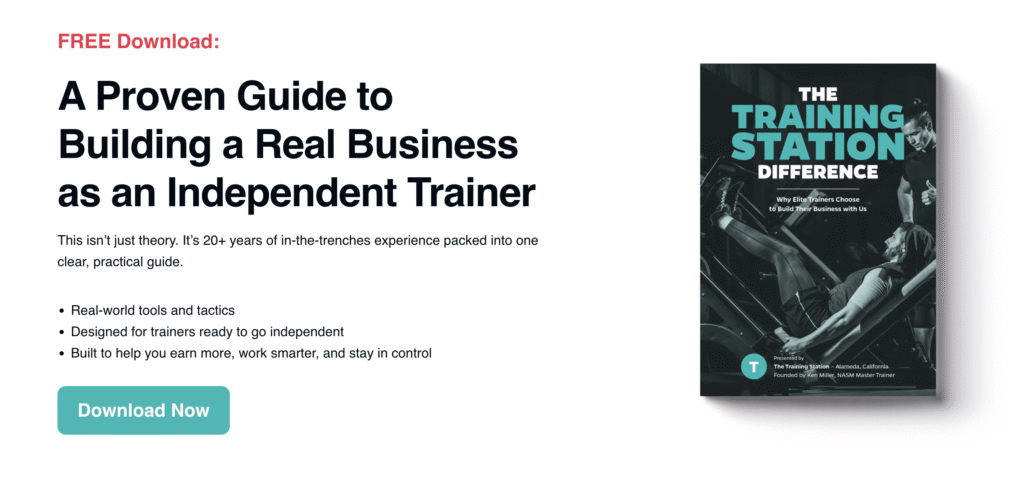
It expands on many of the ideas we’ve discussed in this article and will give you a clearer understanding of what it really takes to build a successful independent coaching business.
Whether you eventually choose Training Station or another path entirely, I think you’ll find it gives you a solid foundation to build from.
However you decide to move forward, don’t rush the process.
Take the time to build the kind of business that clients enjoy coming back to, feel confident recommending to others, and that you’re proud to own for many years to come.
Next Steps
- Book a free tour and conversation to see whether Training Station is the right environment for the business you want to build.
- Download The Training Station Playbook for a practical guide to building a successful independent coaching business.
There’s no pressure—just practical guidance to help you make the right decision for your future.
Frequently Asked Questions
What do clients look for in a personal trainer?
Most clients are looking for much more than someone who can write a good training program. They want a trainer they can trust, someone who listens, communicates well, and makes them feel comfortable throughout the coaching process. Technical knowledge is important, but the overall experience often has a much bigger influence on whether a client stays with you over the long term.
Why do clients stay with personal trainers?
Results certainly matter, but they’re only part of the picture. Clients are far more likely to stay when they feel supported, understood and confident they’ve chosen the right person. Consistent communication, professionalism and a positive coaching relationship all contribute to long-term client retention.
What makes a personal trainer professional?
Professionalism starts long before the first workout. It includes the way you communicate, how organised you are, whether you arrive prepared, how you treat your clients, and the standard of the environment you coach in. Clients notice these details, even if they never mention them directly.
How can personal trainers improve client retention?
The trainers who retain clients well usually focus on the complete experience rather than the workout alone. Listening carefully, following up consistently, communicating clearly and making every client feel valued all help build stronger long-term relationships.
Why do clients leave personal trainers?
In some cases it’s because circumstances change, but more often it’s because the overall experience gradually stops meeting the expectations the client had when they first started. Small things such as inconsistent communication, lack of preparation or feeling taken for granted can slowly weaken the relationship over time.
What makes clients refer their personal trainer?
People usually recommend trainers because they’ve had a positive experience working with them. Clients are far more likely to refer friends, family and colleagues when they trust you, enjoy training with you and feel confident recommending your services to someone they care about.
How important is communication in personal training?
Good communication is one of the most important parts of coaching. Prompt replies, regular follow-up, encouragement and accountability all help clients feel supported between sessions. In many ways, the coaching relationship continues long after the workout has finished.
Does the gym environment affect client retention?
Yes. Clients experience your coaching and the training environment as one complete experience. A clean, professional and welcoming facility helps clients feel comfortable, supports your reputation and can have a significant influence on whether they continue training with you over the long term.